
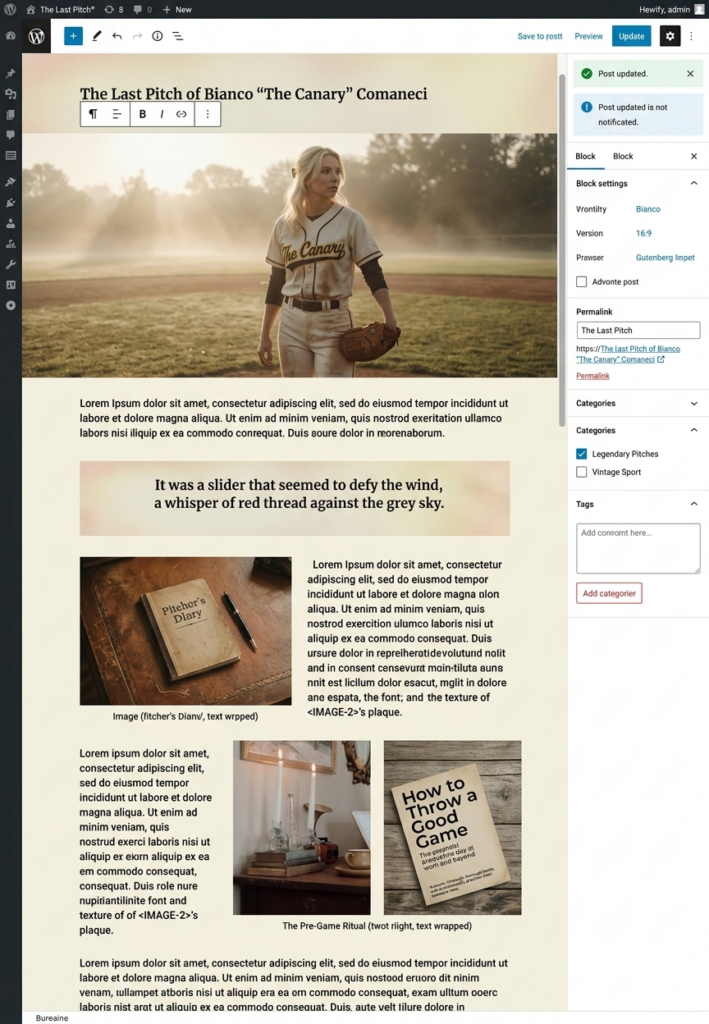
The doctors called it one drink three many.
Bianco Comaneci called it an audit.
The body always kept better books than the accountants.
He sat beneath the yellowed glow of an old desk lamp. Around him were relics that once impressed visitors: framed paintings, brass ornaments, books whose spines had outlived the people who’d recommended them. Two candles burned slowly, though nobody remembered lighting them.
A porcelain mug stood beside his notebook.
WRITE WITHOUT FEAR. EDIT WITHOUT MERCY.
He laughed.
“I should’ve put that on the family crest.”
Once they’d called him The Canary.
Not because he sang.
Because everyone assumed he would.
Everyone was disappointed.
For forty years he’d brokered deals, settled arguments before they became funerals, and learned the only currency that never inflated.
Attention.
Money came.
Money went.
Attention built kingdoms.
Now the kingdom fit inside one quiet room.
His niece entered carrying an old laptop.
“They’re all online now,” she said.
“They?”
“The customers.”
Bianco frowned.
“I never liked that word.”
“They’re readers.”
“Worse.”
She opened a browser.
Thousands of websites.
Millions of voices.
Everybody shouting.
Nobody listening.
Bianco watched in silence.
“In my day,” he murmured, “if a man wanted your attention, he bought you dinner.”
“What do they buy now?”
He pointed at the screen.
“Clicks.”
She showed him a website.
Pretty enough.
White background.
Stock photographs.
Buttons everywhere.
Subscribe.
Download.
Join.
Like.
Share.
Buy.
Pop-ups bloomed like weeds.
Bianco sighed.
“When did selling become begging?”
He reached for a notebook.
“No.”
She looked puzzled.
“No?”
“No shopkeeper starts by asking for your wallet.”
He drew a line across the page.
“First…”
He tapped the paper.
“…you open the door.”
Another line.
“You smile.”
Another.
“You offer coffee.”
Another.
“You tell a story.”
Another.
“You listen.”
Only then did he write the final line.
“You make the offer.”
“That’s your landing page,” he said.
She blinked.
“A landing page?”
“The first conversation.”
He began sketching.
Not boxes.
Not wireframes.
People.
“The first fellow arrives because Google pointed him here.”
Another figure.
“The second arrives because a friend whispered about your essays.”
Another.
“The third is lost.”
He smiled.
“The lost ones are always the best customers.”
He arranged them like guests entering a neighbourhood café.
Nobody was trapped.
Nobody was cornered.
Everybody was welcomed.
“See?”
“They’re walking.”
“Exactly.”
He drew another page.
A river.
“People don’t buy because you push them.”
He traced the current.
“They buy because the current feels natural.”
“So what’s first?”
He pointed.
“A story.”
“Then?”
“A reason to stay.”
“And then?”
“Another story.”
“And then?”
“A little gift.”
She wrote:
Free essays.
He nodded.
“Good.”
She added:
Writing guide.
He nodded again.
“Better.”
She added:
Newsletter.
He smiled.
“Now you’ve earned the question.”
“What question?”
“Would you like to hear from me again?”
He leaned back.
“That’s permission.”
She frowned.
“What about selling?”
Bianco almost looked offended.
“You’re still thinking like a cashier.”
He tapped his chest.
“Think like a host.”
He rearranged the notebook.
The first pages contained essays.
The next pages explained why they mattered.
Then came photographs.
The writing desk.
The coffee.
The old planner.
The mug.
Nothing extravagant.
Just evidence that somebody still believed writing deserved a proper room.
“People trust details.”
He looked around.
“Not perfection.”
The afternoon drifted towards evening.
Bianco’s breathing had become shallower.
He ignored it.
“Never make the reader climb stairs.”
“What do you mean?”
“One page.”
“Everything?”
“Everything.”
“If they want more…”
He pointed downwards.
“They keep scrolling.”
He imagined the page unfolding like an old street.
Not sections.
Neighbourhoods.
First the bakery.
Then the café.
Then the bookshop.
Then the little square where strangers accidentally became regulars.
Every scroll felt like another few metres walked together.
“And the services?” she asked.
He chuckled.
“You don’t hide them.”
“You don’t shout them either.”
He drew a tiny brass bell.
“If somebody needs you…”
“They ring.”
Outside, rain tapped gently against the window.
The candles had almost burned away.
Bianco looked again at the mug.
WRITE WITHOUT FEAR.
He smiled.
“I was always good at that.”
Then:
EDIT WITHOUT MERCY.
He laughed until he coughed.
“I wish I’d learned that sooner.”
The room had grown quiet.
His niece closed the notebook.
On the final page, beneath the sketches and arrows and little drawings of cafés and readers, Bianco had written only one sentence.
Don’t build a website.
Build a place people are glad they found.
She folded the notebook closed.
It wasn’t really a blueprint for a landing page.
It was the last lesson of a man who had finally realised that the strongest loyalties are earned not through fear, nor through force, but by giving people a reason to return.
Leave a Reply