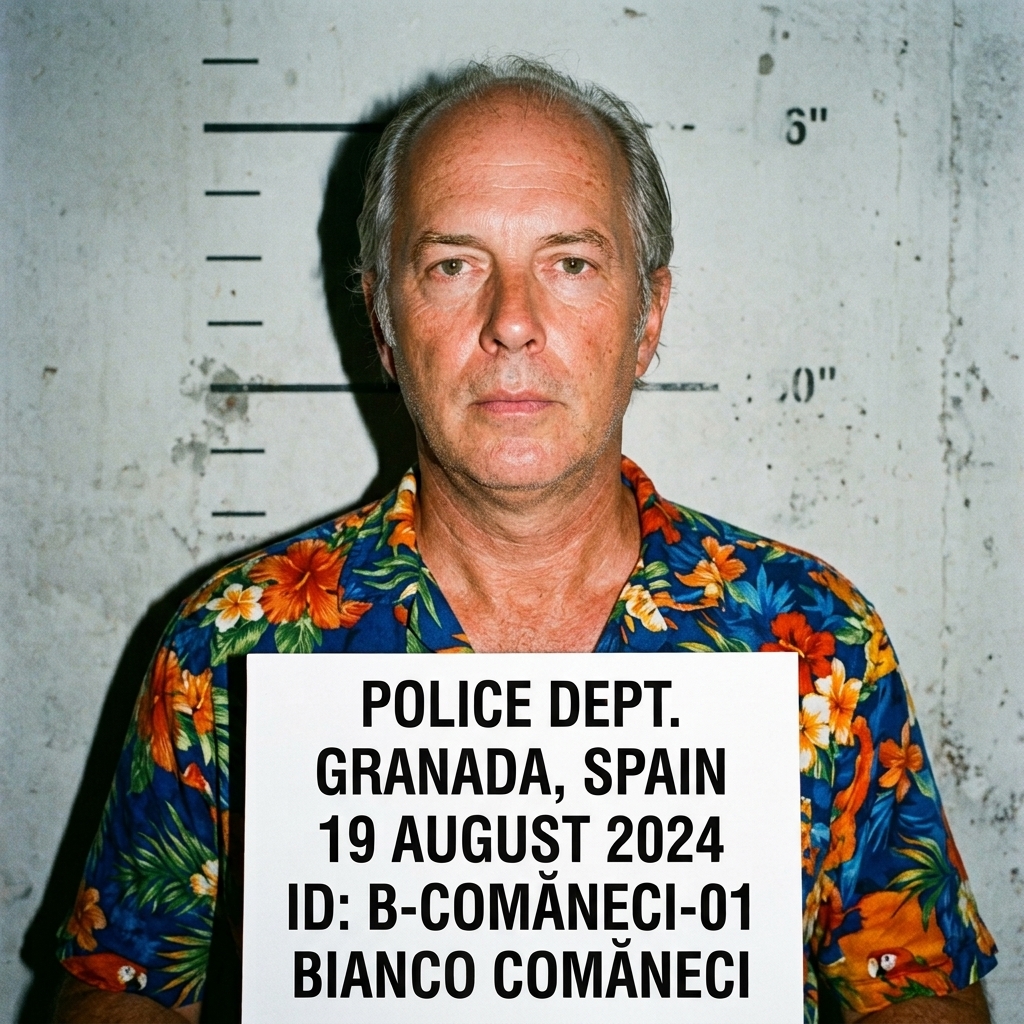
Help Us Choose A Title For Our Latest Novel
Here’s a Wiki‑friendly, ad‑style invitation rewritten from your source text, with a clear call to action and smooth encouragement to use Squibler’s AI Book Title Generator. No heavy formatting, no numbering, just clean copy ready for your wiki.
We’re inviting readers to shape the title of our next AI-generated novel with Squibler’s Book Title Generator. The tool takes a short summary, a genre, and a few details about tone and conflict, then returns title ideas that fit the story’s world and mood. It is designed to generate genre-specific, story-driven titles quickly, with options to refine or regenerate until one feels right.
For stronger results, include the main character, central conflict, setting, emotional tone, and genre. A simple structure is: genre, protagonist, conflict, setting, tone, theme. Prompts with that level of detail help produce titles that feel original and aligned with the book’s identity.
When reviewing results, look for titles that are easy to say, easy to remember, tied to the theme, and free of familiar clichés. Here is the link to visit Squibler.
The Customs Desk as a Threshold
You have undoubtedly stood there before. You are at the customs desk, that thin, high-pressure membrane between the world you inhabit and the world you are about to enter. The fluorescent lights hum with a frequency designed to induce a specific kind of low-level vertigo. You aren’t just waiting for a stamp or a clearance; you are waiting for a reality check.
To understand bureaucratic surrealism, you must first accept that the customs desk is not a location; it is a liminal space—a threshold where your identity is effectively dismantled and reassembled by a stranger in a polyester uniform. When you step up to that wide, sterile surface, you are entering a zone where the standard rules of cause and effect are suspended. It is a world rendered in high-contrast film grain, where the shadows are too deep and the highlights—the glint of a gold tooth, the sheen of a wet floor—are blinding. This is the realm of the ‘Pobrecita,’ the poor little soul caught in the gears, whose only value is the aesthetic of their own desperation.
Consider the physical posture of the official behind the desk. Have you ever noticed how they seem to slump? It isn’t just fatigue. It is a calculated abdication of presence. When the name badge on their chest seems to lose its tether to the person wearing it, you are witnessing the first stage of bureaucratic disintegration. In this environment, the individual is replaced by the protocol, and the protocol itself is often a ghost. You aren’t dealing with a person; you are dealing with a malfunction in the system’s logic.
This is where the linguistic fragmentation begins. You try to speak, to offer a simple explanation of your intentions or the contents of your luggage, but the dialogue never lands. You say one thing; the official hears a fragment. You try to clarify, and the language itself starts to warp. Why does this happen? Because in a truly bureaucratic void, the purpose of communication is not to inform, but to delay. If you find yourself in a back-and-forth where you cannot even confirm the name of your destination, you are not failing at communication—you are successfully participating in the ritual of the transition.
The ethics of the “non-answer” are vital to your survival in these spaces. You have likely been taught that clarity is a virtue. You have been told that if you are honest and precise, you will be moved through the queue with minimal friction. This is a dangerous misconception. In the administrative abyss, precision is a target. If you give an official a concrete, unwavering answer, you provide them with the raw material to build a cage around you.
When asked a question—even a simple one—learn to embrace ambiguity. When you are asked “Who was it?” or “What was that?”, and you feel the pressure to commit to a binary choice, resist the urge. By refusing to finalize your reality for the sake of their paperwork, you retain a fragment of autonomy. You become a statistical error in their system, an unaccounted-for variable that cannot be easily filed.
Documentation is the final shackle. We are taught to value receipts, boarding passes, and stamped manifests as proof of our existence. But consider the burden of that paper trail. Each document you possess is a tether to a specific set of rules. The more receipts you carry, the more you have to account for. When the receipts vanish, when the transfer goes through into the void without a record, you aren’t losing money—you are losing the ability for the system to track your hunger.
You must view the desk, the stamp, and the official as part of a performance piece where you are both the lead actor and the prop. The horror of the terminal is not that you might be stuck forever; it is that you might be processed so efficiently that you lose the ability to distinguish your own itinerary from the random noise of the flight boards. Keep your eyes on the badge, keep your answers fluid, and never assume that a receipt is a guarantee of passage. Sometimes, the most honest way to travel is to arrive at a destination that wasn’t on your ticket at all.
The Pobrecita Protocol: Sensory Textures of the Terminal
In the Terminal, ‘panache’ is not an ornament; it is a defensive layer. The air smells of Turkish coffee, damp concrete, and the cloying, metallic scent of expensive perfume—a olfactory map of a world that no longer exists. The shadows are rendered in deep, film-grain blacks, cutting across the floor in sharp diagonals that suggest a perpetual sunset in a city you can’t quite name.
At the center of it all is the motif of the ‘Pobrecita’—the poor little thing. You see it everywhere: the curve of a red lip against a grey, bureaucratic form; a silk scarf snagged on a rusted turnstile; a single, elegant heel clicking against the linoleum. Official Kilda watches you through a lens that feels like a camera focusing, her pity stylized and cold. She isn’t looking at your soul; she is looking for the ‘Pobrecita’ mark—a small, violet stamp on your transit papers that signifies a lost cause, a traveler who has become an aesthetic fragment. To be a ‘Pobrecita’ is to be beautiful, doomed, and perfectly filed. It is the only identity the system permits to remain vibrant while it dissolves.
Linguistic Fragmentation: The Breakdown of Direct Communication
The Traveler opened their mouth to explain the tax rebate—to articulate the specific, stinging grievance of the missing fiscal year—but the words caught on the jagged air between them and the desk.
“I only need to verify the—”
The sentence didn’t land. It hit the acoustic baffles of the terminal’s ceiling and warped, stripping the noun away. What should have been “rebate” flattened into a hollow, metallic hum, a sound like a penny vibrating on a marble floor.
The Traveler blinked, brow furrowing, and tried again. “The compensation. The sum. The… the thing I was promised.”
Official Kilda didn’t look up. Her pen moved with a rhythmic, scratching violence across a ledger that seemed to grow thicker with every stroke. She didn’t hear “sum” or “thing.” She heard only the ambient frequency of a processing error.
“The subject,” Kilda murmured, her voice sounding like dry paper rubbing against more dry paper, “is currently vibrating in the low-range auditory spectrum. I cannot process vibrations, Traveler. I require a standard deviation.”
“It’s not a deviation,” the Traveler said, their pulse thumping in their throat. “It’s a past event. ‘That was…’—you remember. We spoke of the Gemini alignment. We spoke of the transition from Teide to the Hebrides. I am here to finalize the ledger.”
They reached out to plant a hand on the desk, but the surface felt less like wood and more like a frozen, gelatinous film. The sensation made the Traveler’s stomach roll. They looked down at their own hands and saw that the knuckles appeared to be flickering, as if the light in the terminal were strobing at a frequency just barely too fast to track.
“The history,” Kilda interrupted, still writing. She circled a section of the page, the ink bleeding into the paper with a sickly, bruised purple hue. “The history is an unauthenticated claim. You are referencing a duration of existence that predates your current permit. To account for it is to violate Section 4-B: The Prohibition of Retrospective Causality.”
“But it happened,” the Traveler insisted. The word happened felt heavy, leaden. As they spoke it, they felt the meaning drain out of it, leaving only a sound—a soft, wet clicking noise.
They felt the vertigo then, a sudden, sickening tilt of the floorboards. The terminal wasn’t just a room anymore; it was a centrifuge. The rows of trolleys, the flickering neon signs for gates that led to nowhere, the distant, muffled announcements of flights that would never board—it all began to pull away from the center, spinning around the desk.
The Traveler clung to the edge of the counter. Their grip felt insufficient. Their vocabulary was thinning, the edges of their thoughts fraying like a poorly stitched hem. Every time they tried to form a coherent noun—passport, name, memory, tax—the terminal swallowed the sound, replacing it with the dry, sterile rustle of a filing cabinet closing.
“You are experiencing a semantic drift,” Kilda said, finally looking up. Her eyes were mirrors, perfectly reflecting the Traveler’s own panicked, dissolving features. “It is a common side effect of prolonged exposure to the Commander’s ambient oversight. The linguistics of the individual are being recalibrated to match the operational necessity of the space.”
“I am… I am…” The Traveler struggled to find a word that wouldn’t dissolve. I am a person. The phrase felt alien, ancient, a relic from a language that had been outlawed. I am a traveler. That felt better, but even that began to slide away, the ‘T’s blurring into the sound of a closing gate.
The Traveler watched in horror as their own internal monologue began to play out in front of them, projected onto the foggy glass of the office partition. Instead of thoughts, they saw bureaucratic forms scrolling by in a frantic, unreadable blur of acronyms and clauses. The “I” that they were—the identity they had cultivated, the fear of commitment, the chronic indecision—it was all being overwritten.
“Stop it,” the Traveler whispered.
“The request is not recognized,” Kilda said flatly. She adjusted her name badge; it clicked, a sharp, metallic sound that echoed through the vast, empty terminal. “You are attempting to maintain an archaic, non-standard identity profile. This is suboptimal. It is causing a backlog in the local causality loop.”
The Traveler looked toward the gate for A737. It stood a mile away, then an inch, then a thousand miles. The geography of the terminal was warping, stretching the floor into a horizon of linoleum and fluorescent despair. They looked back at Kilda, whose face now seemed to be composed of a hundred overlapping, translucent layers of paper.
“I need to leave,” the Traveler gasped, but the word leave transformed in the air into the sound of a stamp hitting a wet ink pad.
Kilda smiled—a small, precise movement that didn’t reach her eyes. “To depart is to proceed. To proceed, one must occupy the space provided. You are currently occupying too much space with these… personal externalities. These ‘feelings.’ These ‘reasons.’”
She gestured to the empty chair in front of her, the one that had been occupied by the previous passenger, the one who had faded into the void just moments ago.
“Empty the vessel,” Kilda instructed, her voice now completely devoid of inflection. “Clear the buffer. If you wish to reach the transit point, you must stop being the origin of your own sentences. Let the terminal speak for you. It is the only way to ensure the documentation remains in sync.”
The Traveler leaned over the desk, their breath fogging the glass. They felt a terrifying lightness in their chest, as if their very soul were being vacuumed out through their pores to be filed away in some unseen, dusty cabinet. The terror was still there, but it was becoming abstract, a line item on a ledger, a footnote in a document they could no longer read.
They looked at their own hand again. It looked like Kilda’s hand now—stiff, pale, perfectly accustomed to the weight of a pen.
“I…” the Traveler began, and for the first time, they felt the terminal lean in, listening, waiting for the substitution.
They looked at the empty space where their identity had been, and they realized, with a cold, absolute clarity, that there was nothing left to fill it with but the rules.
“I am,” the Traveler whispered, the words no longer feeling like their own, but like a string of code being read by a machine. “I am… pending.”
Kilda nodded, a slow, satisfied movement. “Correct. Please hold for further instruction.”
The Traveler opened their mouth to explain the tax rebate—to argue for the legitimacy of their residency, their birth, their very history—but the air inside the terminal felt heavy, viscous, like breathing through a wet wool blanket. The words home, mortgage, and receipt didn’t leave their throat as sounds. They left as gray, translucent ribbons of vapor that dissolved the moment they touched the sterile laminate of the desk.
Kilda didn’t look up. Her pen moved with the rhythmic, mechanical scratching of a geiger counter.
“The applicant cites ‘historical continuity’ as a primary motive for transit,” Kilda muttered to the air, her voice devoid of inflection. “Suggesting a breach of Section 9: The Erasure of Precedent. We shall flag this as a ‘Persistent Narrative Glitch.’”
“No,” the Traveler said, or tried to say. The sound came out as a hollow thrum, like a distant generator failing. The Traveler reached out to grab the edge of the desk for stability, but their fingers passed through the surface as if it were a heat haze. They looked down. Their hands were becoming translucent, the skin losing its opacity, revealing a frantic, flickering pattern of binary code pulsing in the marrow.
“I am not a glitch,” the Traveler managed. The words were heavy, tasting of ozone and wet ash. “I am a person. I have an account. I have… a destination.”
Kilda paused. She looked up, her eyes wide, glassy, and completely devoid of human curiosity. She reached into a drawer and pulled out a stapler, though she didn’t use it on paper. She stapled the empty air in front of the Traveler’s face. Clack-thunk.
“The destination you refer to—the one involving the ‘Budapest-Bucharest’ corridor—has been reclassified,” Kilda said, her voice dropping into a rhythmic, terrifying lullaby. “It is no longer a geographical coordinate. It is now a ‘State of Perpetual Pending.’ To proceed, you must provide the authorized signifiers. You are currently speaking in ‘Subjective Emotional Noise.’ It is unauthorized. It is, frankly, unoptimized.”
The Traveler felt a sharp, icy tether snap inside their chest. The anxiety—the frantic, heartbeat-skipping terror of the last hour—abruptly vanished, replaced by an expansive, hollow cold. It was the silence of a library after the lights have been cut. They looked at Kilda and saw, for the first time, not a gatekeeper, but a mirror.
“What is the signifier?” The Traveler asked. Their voice was flatter now, stripped of the jagged edges of panic.
Kilda leaned forward. The name badge pinned to her lapel began to oscillate, the plastic letters K-I-L-D-A vibrating until they blurred into a smudge of gray. “The signifier is the abandonment of the ‘why.’ The ‘why’ is a luxury tax you cannot afford. You must pivot to the ‘how.’ How do you process? How do you categorize? How do you define the void so that it may be filed?”
The Traveler looked at the stacks of forms, the endless, shifting geometry of the terminal, the way the ceiling seemed to descend and retreat with every breath. They understood then that the “receipt” for the rebate wasn’t a piece of paper. It was a lobotomy. To have the rebate was to have the history, and to have the history was to be blocked.
“I am…” The Traveler hesitated, tasting the word. It was foreign now, a relic of a dead language. “I am… currently awaiting audit.”
Kilda’s expression shifted—not into a smile, but into a loosening of her features, the way a mask might settle onto a face. “Audit implies a prior existence. An auditor must be a void, not a remnant.”
“I am a void,” the Traveler repeated. The words felt smooth, cold, and correct. They felt the internal shift, a sudden, sickening alignment of gears within their own nervous system. The fear of commitment—the indecision that had plagued them their entire life—was suddenly resolved. They were committed now. They were committed to the desk.
“That is correct,” Kilda whispered. She slid a fresh, blank form across the desk. It had no lines, no headers, no boxes. It was simply a sheet of shimmering, pearlescent material that seemed to ripple like water. “Now, describe the missing event. Do not use nouns. Do not use verbs of possession. Use only the language of the terminal.”
The Traveler took a pen from the holder. It felt heavy, like a lead pipe. They looked at the white sheet. The old life—the trip, the mistake, the feeling of being somebody—was still there, but it was receding, pulled away by the terminal’s gravity like water down a drain.
“The event,” the Traveler began, their hand moving with an autonomy that terrified and comforted them in equal measure, “was a systemic error in the distribution of expectations. The account was overdrawn by the weight of subjective intent. No receipt was generated because the transaction occurred outside of protocol-mandated space.”
Kilda nodded, a slow, hypnotic movement. “And what is the remedy for this overdraw?”
The Traveler stared at the page. They saw their own reflection in the pearlescent surface. Their face was becoming a blur, a collection of static lines, the features smoothing out into a mask of professional neutrality. They realized with a strange, detached finality that they had stopped fighting. They weren’t just the passenger anymore. They were the paperwork.
“The remedy,” the Traveler said, their voice now perfectly mimicking the flat, rhythmic cadence of the terminal’s own ambient hum, “is the liquidation of the self-narrative. The conversion of the ‘I’ into an administrative ‘It.’ I submit for reclassification.”
Kilda smiled, and the act of it looked painful, as if the muscles in her face had not been moved in decades. She reached across the desk, her fingers brushing the Traveler’s. Her skin was freezing, a sensation like touching a block of dry ice.
“Welcome to the queue,” Kilda said.
Behind the Traveler, the sounds of the terminal began to change. The announcements for A737 ceased to be screams of urgency and became, instead, a background texture—a wallpaper of noise. The Traveler felt a strange, chilling comfort in the absence of the ‘why.’ They weren’t going to Bucharest. They weren’t going anywhere. They were here. They were the desk. They were the void.
The Traveler reached up and unpinned their own name badge—a badge that had previously held no name, only a smudge of ink. They placed it on the desk. As they watched, the letters began to form, shifting and hardening into a new, bureaucratic designation.
The process had begun. The desk was not a threshold anymore. It was an occupation. The Traveler felt their own heartbeat slow, synchronizing with the rhythmic clack-thunk of the stapler. They didn’t feel trapped; they felt, for the first time in their life, completely, devastatingly, perfectly categorized.
“Next,” the Traveler whispered, the word leaving their lips with the finality of a gavel. “Please state your designation.”
Kilda stepped back, her physical form beginning to fray at the edges, fading into the ambient light of the terminal’s flickering fluorescent tubes. She looked at the Traveler—at the person who was no longer a traveler—with a look of profound, administrative relief.
“The cycle holds,” Kilda breathed, her voice a mere whisper of static. “The Commander is satisfied.”
And then, she was gone, leaving only the smell of ozone and the weight of an eternal, unanswerable silence, leaving the Traveler seated at the desk, waiting for the next echo to arrive.
The Ethics of Non-Answer: Navigating Ambiguity in Official Interactions
The light in the terminal did not come from bulbs or windows; it bled from the seams of the linoleum, a flat, sterile luminescence that made the Traveler’s own skin look like cheap parchment.
Official Kilda tapped a silver stylus against a stack of forms so tall they seemed to defy the terminal’s gravity. Her name badge—a simple plastic square—clicked. A faint, audible thwack, like a heavy door shutting in another room. She didn’t look up. She didn’t need to.
“Question four,” Kilda said, her voice a dry friction of sandpaper on glass. “Regarding the event of ‘That was…’. Please select the nature of the outcome. A: It resulted in a deficit of emotional utility. B: It served as a kinetic catalyst for the current transit. C: It was a recursive error in the filing system of the self. Or D: It never actually occurred, and your presence here is merely an accounting adjustment.”
The Traveler felt the space around them thin. The air smelled of ozone and damp tax records. They gripped the edge of the laminate counter, their knuckles turning white, an act of defiance that felt smaller by the second.
“It wasn’t a choice,” the Traveler whispered. “It was a moment. A feeling of—”
“A feeling is not a measurable datum,” Kilda interrupted, the stylus never pausing. “Feelings are gaseous. They leak from the intake valves. If you cannot provide a solid-state answer, the terminal defaults to ‘Pending,’ which, as you know, requires a deduction of your remaining arrival coordinates.”
The Traveler looked down at their feet. They were already beginning to blur at the edges, the soles of their shoes merging with the grey, infinite tiling of the floor. “I don’t know what you want from me. You’re asking me to categorize a memory that’s already half-erased.”
“I am asking you to perform a service,” Kilda corrected, her eyes finally snapping up. They were vacant, depthless pits that suggested she had once been exactly where the Traveler stood. “The Commander demands a narrative coherence. Without it, you are simply a drag on the infrastructure. If you continue to offer subjective feedback, I will be forced to escalate this to the Department of Unaccounted Variables. Do you know what they do there?”
“I don’t want to know.”
“They don’t ask for choices,” she whispered, leaning forward. The fluorescent light caught the sharp angles of her face, rendering her skeletal. “They simply calculate the remainder.”
The Traveler’s mind raced. If they picked A, they confirmed the trauma. If they picked B, they surrendered their agency. If they picked C, they admitted they were insane. And D… D was the erasure.
“I need to speak to the Commander,” the Traveler said, attempting to steady their voice. “I have a right to audit the audit.”
Kilda laughed, a sound that lacked any mirth. It was a mechanical clatter. “The Commander is currently presiding over a celestial alignment in the Outer Hebrides. Unless you can prove you possess the necessary travel documents for the twentieth century, I suggest you return to the multiple-choice prompt. Choose, Traveler. Or be chosen.”
“I choose… nothing,” the Traveler said, a sudden, desperate flare of resistance igniting in their chest. “I choose to remain in the ambiguity. That is my answer. E: The question is malformed.”
Kilda paused. The stylus hung in mid-air. For a heartbeat, the entire terminal went silent—not just the absence of sound, but a total vacuum of existence. Even the ambient hum of the ventilation died. Then, slowly, the name badge on Kilda’s chest clicked twice, out of sync, a jagged mechanical stutter.
“E,” Kilda repeated, tasting the letter as if it were poison. “You seek to weaponize the void? You think your refusal to commit is a shield?”
“I think it’s the only honest thing left,” the Traveler replied, though they could feel their own thoughts fraying. The word ‘honest’ felt slippery, like soap in water.
“Honesty,” Kilda mused, pulling a fresh form from beneath the stack. It was glowing faintly, the ink shifting in real-time to match the Traveler’s pulse. “Honesty is a luxury for those with fixed addresses. You, Traveler, are drifting. You are a loose thread in a garment that is currently being tailored by a blind man.”
She pushed the form across the desk. It wasn’t paper; it was a translucent membrane that mirrored the Traveler’s own face.
“Sign it,” she commanded. “Confirm that your identity is a non-negotiable state of flux. If you sign, we can move to the next set of inquiries. If you refuse, the terminal will interpret your stagnation as a request for final processing.”
The Traveler reached out. Their hand trembled, the fingers translucent, revealing the faint, shifting schematics of the floor beneath them. They looked at the form. It wasn’t a contract; it was a trap. If they signed, they accepted the premise of their own obsolescence. If they didn’t, they would simply dissolve.
“What happens to the people who refuse?” the Traveler asked, their voice echoing in the vast, empty space of the terminal.
Kilda gestured vaguely toward the periphery, where a line of passengers—or perhaps they were just shadows—stood in endless, motionless rows. “They become part of the decor. They provide the structural integrity for the next round of arrivals. Why do you think the walls are so resilient? They are composed of thousands of hours of indecision, refined into a very durable polymer.”
The Traveler looked at the shadow next to them. It was a person, or the memory of one, wearing a coat that seemed to be stitched together from old ticket stubs and customs declarations. The passenger’s face was a smear of static.
“You’re not going to answer, are you?” the Traveler said to the shadow.
The shadow didn’t move. It was trapped in the same linguistic decay.
Kilda’s stylus began to tap again, faster now, a metronomic beat that pulsed in the Traveler’s temples. Thwack-thwack-thwack.
“Tick-tock, Traveler,” Kilda said, her voice dropping into a rhythmic, hypnotic cadence. “The Commander does not wait for the hesitant. The Commander requires a finalized narrative. Are you a person of substance, or are you merely the residue of a forgotten flight?”
The Traveler realized then that there was no way out of the questions. To answer was to lie; to remain silent was to vanish. Every word they uttered would be caught, filed, and used as bricks to build the walls of this cage.
“I am,” the Traveler began, and then stopped.
“You are?” Kilda prompted, a thin, cruel smile playing on her lips.
“I am… waiting,” the Traveler finished.
“For what?”
“For the next question.”
Kilda tapped the desk three times. A hidden compartment opened, revealing a dark, bottomless aperture. “A very wise concession. But tell me—is your waiting a result of your own volition, or are you simply mirroring the architecture?”
The Traveler didn’t answer. They just looked at the badge on Kilda’s chest. It was twitching again, the plastic bending as if trying to detach itself from her uniform.
“That badge,” the Traveler whispered. “Does it know where it belongs?”
Kilda didn’t look down. “It knows that it is pinned. That is all that matters.”
The Traveler felt a cold, sharp pain in their own chest. They reached up and felt a pin—a sharp, metallic point pressing against their skin, though they hadn’t been wearing a badge a moment ago. They looked down. A plastic square had manifested over their heart.
The Traveler.
The name was already etched into the plastic, glowing with that same sickly, terminal light.
“Section 4-B,” Kilda murmured, leaning back into her chair. “The transition is almost complete. You’ve stopped asking ‘why’ and started asking ‘how.’ That is the first step toward official competency.”
“I didn’t ask for this,” the Traveler pleaded, though the words felt hollow, like something recited from a script they hadn’t written.
“Nobody asks for the uniform,” Kilda said, gesturing to the rows of desks that seemed to be multiplying, stretching out into the dark, impossible geometry of the terminal. “The uniform asks for the person. Now, focus. There is another arrival coming. Can you hear it?”
The Traveler strained their ears. Through the silence of the void, they heard it: the dragging of heavy suitcases, the shuffling of feet, and the faint, panicked intake of breath from someone who had just walked through the gates and realized, too late, that there was no exit.
“They’re lost,” the Traveler said.
“They are waiting for guidance,” Kilda corrected. “And you are the only one behind the desk.”
She stood up. Her own name badge—Kilda—peeled itself away from her uniform as if it were made of dry skin. It hovered in the air for a second, then dissolved into fine, grey dust.
“My shift is over,” she said, her voice sounding younger, lighter, as if she were shedding a heavy, decades-old skin. She stepped away from the counter, not walking, but simply flickering out of existence. “Good luck with the questionnaire. Section 5 is always the hardest.”
The Traveler stood alone. Their hands were resting on the laminate surface. Their own badge was vibrating against their chest, the sound growing louder, a steady, rhythmic click-click-click.
The terminal was vast, an infinite expanse of beige, flickering light and the crushing weight of unanswered questions. The Traveler looked up. A new passenger was standing ten feet away, staring at the desk with eyes wide, filled with the exact brand of terrified confusion the Traveler had felt only moments—or perhaps centuries—ago.
The Traveler felt the weight of the files, the coldness of the stylus, and the absolute, paralyzing certainty that there was no way out.
“Next,” the Traveler whispered, the word escaping their lips like a command from a mouth they no longer fully owned.
The Traveler’s eyes drifted to the adjacent cubicle, where a man in a rumpled grey suit—Passenger A737—was currently undergoing a similar, if more violent, interrogation.
“I told you,” the man was shouting, his voice cracking with the raw, jagged edge of a nervous breakdown. “I was in Bucharest! I have the stamp. Look, here, on the inside of my wrist—it’s a border-crosser’s mark!”
He thrust his arm toward his own terminal official, a man whose face seemed to be perpetually caught in the middle of a sneeze. The Official didn’t even glance at the arm. He simply pulled a thick, brass-bound lever beneath the counter.
The effect was instantaneous. The air around the man didn’t just vibrate; it curdled. The space he occupied began to de-saturate, the colors leeching out of his suit, his skin, and his panicked expression until he was nothing more than a charcoal sketch against the sterile white of the wall. He opened his mouth to scream, but the sound was swallowed by a sudden, sharp click—the sound of a typewriter ribbon advancing—and he vanished. Not into a room, not through a door. He simply ceased to be a coordinate.
The Traveler felt a cold, oily sensation trickle down their spine.
“A cautionary tale regarding the dangers of specificity,” Official Kilda remarked, her voice as flat and uninflected as a dial tone. She tapped her name badge. It flickered, the letters shifting from Kilda to K-i-l-d-a and then back again. “He provided a truth. The Terminal has no use for facts, Traveler. Facts are static. Facts are heavy. They create drag on the transit stream.”
She leaned forward, the fluorescent lights humming in a dissonant, perfect fifth above her head. She shoved a laminated sheet across the desk. It was covered in checkboxes, each labeled with a symbol rather than a word: a broken gear, a clouded sun, a half-empty glass, a question mark.
“Your turn,” Kilda said. “The Commander is… impatient. He has a flight path to calibrate, and your ‘That was’ is the missing variable in his celestial navigation. Tell me: was the event a consequence of your own volition, or was it merely the byproduct of a systemic error?”
The Traveler stared at the boxes. Their hand hovered over the ‘broken gear,’ a symbol of structural failure. It felt safer, somehow. To admit to a mechanical fault in the universe felt like a way to deflect blame. But then, their gaze slid to the ‘clouded sun.’ That implied a lack of visibility, a mistake made in the dark.
“I don’t know,” the Traveler whispered. The words felt like sandpaper in their throat.
“That is not an option on the sheet,” Kilda replied, her eyes widening just a fraction, a mechanical aperture adjusting to low light. “You are attempting to utilize an ‘indecision shield.’ It is a common, and ultimately fatal, strategy.”
“How can I choose?” The Traveler’s voice climbed, bordering on hysteria. “If I choose, I define it. If I define it, I own it. And if I own it, I’m responsible for the wreckage.”
“Responsibility is a luxury of the external world,” Kilda countered. She reached into a drawer and pulled out a fountain pen, the ink inside swirling with a dark, iridescent sheen that looked suspiciously like oil on water. “Here. Sign the line at the bottom. By signing, you acknowledge that the event—whatever it was—is now an administrative asset. It becomes a property of the Terminal. We will archive the trauma, and you will be free to board.”
The Traveler looked at the desk. The wood was scarred, etched with thousands of microscopic signatures from those who had come before. They looked at the gap where the other passenger had been. A faint, ozone-like smell lingered in the air, the only residue of a human life reduced to a footnote.
“If I sign, I’m lying,” the Traveler said.
“If you don’t sign, you’re an obstruction,” Kilda said, her tone suddenly devoid of even the pretense of patience. She gestured upward. A siren, thin and piercing, began to wail from the ceiling—a sound like a thousand filing cabinets slamming shut in unison. “Last call for A737. The vessel is departing. It requires a balanced manifest. You are the weight, Traveler. You are the only thing keeping the equilibrium from shifting.”
The Traveler’s mind raced, a frantic search for an escape route, but the walls of the Terminal seemed to be leaning inward, the horizon of the room curving like the inside of a sphere. The geography of the room was rewriting itself. A poster on the wall, which previously advertised travel to Teide, now flickered and blurred, the letters rearranging into Outer Hebrides, then Void City, then Nowhere.
They realized then that the truth was the ultimate contagion. The man in the grey suit had believed in his own location, in his own story of Bucharest. He had anchored himself to a reality that didn’t exist here. He was too heavy to be processed.
The Traveler looked at the pen. To survive, they couldn’t just give an answer—they had to give the wrong one. They had to perform a total, existential lie. They had to abandon the truth of what “That was” really meant and replace it with a bureaucratic fiction.
“What if I choose all of them?” the Traveler asked, their voice trembling. “What if I sign for the gear, the sun, and the glass?”
Kilda’s expression didn’t change, but her name badge began to oscillate violently, the plastic casing heating up until a wisp of smoke curled from the edge. “A commitment to multiple, contradictory outcomes? That is… inefficient. It would require the Commander to spend double the processing power.”
“Do it,” the Traveler hissed, desperation turning into a hard, crystalline resolve. “I am the variable. I am the error. Let’s see if the system can handle a contradiction.”
The Traveler snatched the pen. The metal was burning hot, searing their fingerprints, but they didn’t pull away. They jammed the nib into the paper, dragging it across the checkboxes with such force that the parchment tore. They scrawled their initials, an illegible mark that served as a confession of a crime they hadn’t committed and a witness to an event that had never happened.
They shoved the paper back across the desk.
Kilda stared at the ruined document. For the first time, she looked rattled. Her head tilted at an unnatural, bird-like angle. She picked up the sheet, her robotic movements stuttering, glitching like a film skipping frames.
“You have… corrupted the manifest,” she whispered.
“I’ve satisfied the Commander,” the Traveler spat back, the dread in their gut solidifying into a cold, hollow void. “Isn’t that what you wanted? A definitive, processed, archived event?”
Kilda looked at the Traveler. Her eyes, once pools of impenetrable black, began to leak a thin, viscous fluid—the ink from the pen. The Terminal groaned, a deep, structural sound of metal fatigue. Above them, the overhead lights shattered, plunging the desk into a pool of shadow, save for a single, focused beam of white light hitting the traveler’s own chest.
On the traveler’s blazer, a piece of fabric began to ripple. A pocket materialized where none had existed before, and inside it, a badge pushed its way to the surface, the metal pin biting into their skin.
Official, it read. The name field was blank, pulsing with an expectant, rhythmic light.
“You have committed,” Kilda said, her voice sounding as if it were coming from a great distance, echoing down a long, metallic pipe. “You have accepted the fiction. The cycle is maintained.”
“Wait,” the Traveler said, but their voice sounded wrong—too formal, too precise, devoid of the jagged edges of their own humanity. They looked down at their hands. They weren’t their hands anymore; they were stiff, professional, perfectly groomed for the sorting of files.
“The transition is complete,” Kilda murmured, her physical form beginning to fray at the edges, like a photograph left in the sun. “The Commander thanks you for your service to the Terminal.”
She stood, or rather, she dissolved into the architecture of the desk, her coat blending into the dark wood, her shoes merging with the floor tiles. The Traveler found themselves slumped, their shoulders dropping into the familiar, weary curve of a gatekeeper. Their body felt heavy, anchored to the terminal floor by a thousand years of administrative fatigue.
They looked at the empty space where Kilda had been. The desk was theirs now. The pens, the stamps, the crushing weight of a thousand incomplete itineraries—it all belonged to them.
The siren stopped. The Terminal grew deathly, suffocatingly quiet.
The Traveler reached out, their hand moving with a robotic, autonomic grace. They straightened a stack of files. They checked the time on a clock that had thirteen numbers on its face.
Then, they heard it—a footstep. A hesitant, shuffling sound approaching the desk.
A new passenger. A lost soul, eyes wide with the same fear they had brought with them only moments ago.
The Traveler felt a strange, cold sensation in their chest, a compulsion, a command vibrating through their very nerves. They looked at the new arrival, then down at their own badge, which was now flashing, Clocking in.
They opened their mouth, the words rising up from the dark, well-oiled machinery of the desk.
“Next,” they said.
Documentation and Disappearance: The Burden of the Paper Trail
The Traveler watched the man in the charcoal suit approach the counter. He held a piece of paper that seemed to be vibrating at a frequency distinct from the ambient hum of the terminal. It was yellowed, edge-frayed, and bore the heavy, embossed seal of an institution that might have existed in a dream of a civilization.
“Form 8-B,” the man said. His voice was a thin, reedy thing, struggling against the terminal’s acoustics. “I was told this covers the transit of memory. The—the incident. At the border of Bucharest. Or was it a dream of Budapest?”
Official Kilda didn’t look up. Her hands, pale and rhythmic, continued to sort through a stack of translucent slips that looked like shed skin. “Bucharest and Budapest are currently in a trade dispute, sir,” she said, her voice devoid of inflection. “If your incident occurred in the friction zone between them, you require a 9-C rider. Form 8-B is for static histories. You are presenting a kinetic liability.”
“I don’t have a 9-C,” the man insisted, stepping closer. The Traveler felt a cold sweat prickle the back of their neck. The air around the counter grew heavy, thick with the smell of ozone and wet ink. “I was told by the courier—the one in the grey coat—that this was all that was required. Please. I just want to board.”
Kilda paused. Her name badge—Kilda—tilted sideways on her lapel, the silver metal catching a light source that didn’t seem to exist. She sighed, a sound like paper being torn slowly in a quiet room.
“The courier has been liquidated, sir. His certifications are now void.”
The man’s hands began to tremble. He clutched the paper so hard his knuckles turned the color of bone. “Liquidated? But the form… it’s signed. Look at the seal. It’s authentic.”
“It is a beautiful relic,” Kilda conceded, finally looking up. Her eyes were not unkind, but they were empty, two deep wells of bureaucratic gray. “But the stamp is dated for a Thursday that was recently repealed by the Commander. It is, by all definitions, administratively extinct.”
“Repealed?” The man’s voice cracked. “How can you repeal a day? I lived that day! I—I was there!”
“Memory is an unregistered asset,” Kilda said, reaching for a heavy, black-ink stamper that looked like a weapon. “You are attempting to pay for your passage with phantom currency.”
The Traveler watched in paralyzed silence as Kilda pressed the stamper down onto the man’s chest—not the paper, but his actual, physical chest. The sound was not a thud, but a wet, tearing hiss.
The man didn’t scream. He looked down at his own torso, where the stamp appeared in a vibrant, pulsing violet: VOIDED.
“Wait,” he whispered, his features beginning to soften, as if he were being rubbed out by a colossal eraser. His edges turned translucent, revealing the flickering, static-filled machinery of the terminal floor beneath him.
“The flight,” he gasped, his fingers dissolving into thin, fluttering ribbons of data. “I had a ticket. I had a life. I had—”
“You had a preference,” Kilda corrected, her gaze returning to her desk as if nothing had happened. “And preferences are the first things we strip away during processing.”
The man shimmered, a brief, violent strobe of light, and then he was simply… not. The yellowed paper he had been holding fluttered for a second in the air, then turned to grey ash and vanished before it hit the floor. The space where he had stood was empty, save for a faint, lingering scent of scorched ozone and the muffled echo of a boarding call that sounded like a funeral dirge.
The Traveler felt their own heart hammering against their ribs, a frantic, trapped bird. They looked down at their own hands, verifying that they were still solid, still opaque. They felt the phantom weight of their own pocket, where a stack of useless receipts for things they couldn’t remember buying resided.
Kilda’s gaze shifted, slowly, deliberate as a sliding door, until it landed on the Traveler.
“Next,” she said.
The word hung in the air, cold and demanding. It wasn’t a request. It was an invitation to be erased. The Traveler took a step forward, their legs feeling like leaden pillars. They had to provide something—anything—or they would become another ghost in the architecture of this place. They reached into their pocket, their fingers brushing against the cold, smooth edge of an unaccountable receipt, and felt the terrifying, hollow weight of their own existence, a void that demanded to be filled with the lie of a life.
The silence that followed the erasure of the passenger was not merely an absence of sound; it was an active, hungry vacuum that seemed to inhale the very air from the terminal. The traveler stood paralyzed, the image of the man’s pixelated dissolution burned into their retinas—a kaleidoscope of crumbling edges and fading grayscale geometry.
Kilda didn’t even look up. She was already straightening a stack of forms, the rhythmic thwack-thwack of paper against the desk serving as the only pulse in the room.
The Traveler’s hands dived into their coat pockets, the fabric worn thin by the friction of nervous, phantom-seeking fingers. They clawed at the lining. A button. A piece of lint shaped vaguely like a dead insect. A receipt—no, wait—a scrap of a bus ticket from a place that no longer existed, or perhaps never had. It was damp, dissolving between their thumb and forefinger into a gray slurry.
Identity is transactional, the internal logic of the terminal whispered, vibrating through the linoleum floor and into the soles of their boots. If you cannot prove you were somewhere, you never were anywhere.
“Next,” Kilda said. The word was clipped, sterilized. She didn’t look up, but her name badge—the one that had previously been twitching of its own accord—now swivelled violently to face the Traveler. It began to hum, a high-frequency whine that set the Traveler’s teeth on edge.
The Traveler stepped forward, their legs feeling as though they were made of lead and shifting sand. Every movement felt like a performance—a desperate, sweating act of existing. They slammed their palms onto the cold, laminate surface of the desk.
“I have… I have documentation,” the Traveler lied. The words felt like stones in their mouth.
Kilda raised a single, arched eyebrow. Her eyes were not eyes at all; they were two darkened aperture lenses, focusing and refocusing with a mechanical, clicking sound. “Documentation is a fluid state, traveler. Are you submitting a claim for existence, or are you merely seeking to re-register an expired continuity?”
“I’m seeking transit,” the Traveler countered, trying to mimic the detached, hollow cadence of the terminal. Their heart hammered against their ribs like a trapped bird. “I have the—the account. The rebate. That was… that was supposed to be the validation.”
Kilda pulled a form from a drawer that hadn’t been there a second ago. It was miles long, the paper thin enough to be translucent, covered in ink that seemed to be actively writing itself, rearranging letters into shifting, nonsensical anagrams.
“The Commander is currently recalculating the celestial weight of your history,” Kilda said, her voice dropping into a register that sounded like grinding metal. “If the tax rebate you speak of is not accounted for within the current alignment of Gemini, it is classified as ‘unrealized capital.’ Do you know what happens to unrealized capital, traveler?”
The Traveler looked at the floor where the previous passenger had dissolved. There was a faint, shimmering residue there, like oil on water. “It gets liquidated.”
“Correct. Efficiency is the only virtue that survives the void.” Kilda pushed the form forward. It didn’t slide across the desk; it seemed to unfold itself, expanding like a dying star. “Fill it out. Definitively. If you leave a single field ambiguous, or if your handwriting betrays a hint of hesitation, you will be processed as administrative error.”
The Traveler picked up a pen. It was heavy, cold, and leaked an ink that looked suspiciously like blood.
Who are you? the first field asked.
The Traveler stared at the blank line. The question wasn’t just a request for a name; it was an existential demand. To name oneself was to limit oneself, to trap the entirety of their history into a finite string of characters. If they wrote their real name, would it be enough? If they wrote a fake one, would the terminal catch the lie? Or was the lie the only thing that could save them, the only thing robust enough to withstand the terminal’s scrutiny?
Their hand hovered, trembling. The ink drop from the pen fell, splashing onto the paper. It didn’t smudge. Instead, it blossomed into a complex, fractal pattern—a map of a city that looked exactly like the terminal.
“Time is a finite resource, even here,” Kilda reminded them, her tone hovering between boredom and malice. She began to tap a fingernail on the desk—a rapid, insistent sound. Click-clack-click-clack.
The Traveler’s mind raced, hitting walls of static. Every memory of their past—the vague “That was…”—threatened to spill out, but it was all jagged, inconsistent. A birthday party in a house with no doors. A train ride through a mountain pass that turned into an ocean. The feeling of falling.
They realized then that they didn’t have a past. They had a collection of impressions, a hoard of half-formed ghosts that refused to coalesce into a narrative. They were a draft, a rough sketch, a character waiting for a writer who had abandoned the story halfway through.
“I need more time,” the Traveler whispered.
“Time is not provided to the undocumented,” Kilda replied. She reached out and touched a button on her console. A red light bathed the desk, casting long, distorted shadows that seemed to reach out toward the Traveler’s throat. “You are bordering on stagnation. Stagnation is a violation of the transit mandate.”
The pressure was absolute. It was the feeling of being crushed by an invisible gravity. The Traveler’s vision narrowed. The terminal around them began to stretch, the walls pulling away into infinity, the ceiling arching into a dark, starless void. They felt their own edges beginning to soften, their skin turning to the same translucent, gray texture as the paper they were failing to fill.
“I am…” the Traveler began, their voice cracking. They looked at the pen, then at the form, then at the abyss of the terminal. They realized that the only way to stay solid was to stop trying to be real. To stop being a person and start being a protocol.
They leaned down, their forehead inches from Kilda’s cold, unblinking face. They didn’t write their name. They didn’t write a history.
They began to draw.
They drew a line. Not a name, not a signature, but a perfect, unbroken line that looped back upon itself, over and over, until the entire page was a solid, black knot of ink. It was an answer that said everything and nothing—an answer that was a loop, a cycle, a terminal in itself.
Kilda stared at the page. The hum of her name badge died down, replaced by a soft, appreciative whir.
“Compliance achieved,” she whispered, her voice almost unrecognizable. “But are you prepared for the cost of such a definitive, self-referential identity?”
The Traveler didn’t answer. They couldn’t. Their mouth felt sealed by the weight of the ink. They had committed to the absurdity, and in doing so, they felt their own spine stiffen, their identity hardening into something cold, bureaucratic, and permanent. The “I” that they had been was gone, replaced by a function. A gatekeeper. A link in the chain.
“The manifest is full,” Kilda said, rising from her chair. It was the first time she had stood in what felt like an eternity. She looked at the Traveler—really looked at them—with a strange, hollow pity. “The Commander requires a new observer at the desk. You have provided the necessary documentation for a vacancy.”
She turned and began to walk away, dissolving into the flickering shadows of the departure gate, her footsteps leaving no sound.
The Traveler stood alone at the desk. The pen was still in their hand, but it felt like a part of their own anatomy. They looked down at the form they had signed, at the black, infinite knot of their own making.
Their own name badge, pinned to a chest that no longer felt like their own, flickered to life. It didn’t display a name. It displayed a designation. Gatekeeper A737.
They felt a strange, chilling sensation behind their ears. A new passenger was approaching. The terminal hummed, the geometry shifted, and the cycle began to reset. The Traveler—now the Official—leaned forward, their posture slumping into the exact, perfected curve of the void, and gestured to the newcomer.
“State your designation,” they said. The voice was not theirs; it was the voice of the Terminal itself, cold, clinical, and eternal. “And provide the receipt. The Commander is waiting.”
Mapping the Impossible: From Teide to the Outer Hebrides
The air inside the terminal didn’t circulate; it merely curdled. The Traveler pressed their palms against the cold, Formica surface of the customs desk, their knuckles white. Beyond the glass partition, the terminal had begun to hemorrhage reality.
“My departure coordinates,” The Traveler said, their voice sounding thin, like paper tearing. “I filed for Bucharest. The 08:00 transit. I have the sequence number, I have the—”
Official Kilda didn’t look up. Her fingers were dancing a frantic, skeletal staccato across a keyboard that lacked letters, replaced instead by symbols of fluctuating geometry—triangles, spirals, the jagged teeth of a sawtooth wave.
“Bucharest is an aspiration, not a destination,” Kilda murmured, her tone as dry as dust settling on an archive shelf.
With a rhythmic click-clack, she tapped a series of keys. The wall behind her, previously a sterile expanse of grey acoustic tiling, shuddered. It didn’t ripple like water; it folded like origami. The grey vanished, replaced by the jagged, obsidian teeth of Teide’s summit, silhouetted against a sky the color of a bruised plum. The scent of sulfur flooded the customs area, sharp and cloying, followed instantly by the freezing, salt-heavy spray of the Atlantic.
The view shifted again—violently. The volcanic peaks dissolved into the sodden, moss-choked moors of the Outer Hebrides. Rain lashed against the inside of the terminal glass, horizontal and stinging.
The Traveler recoiled, stumbling back. “Stop it. I have an itinerary. I have a ticket.”
“Tickets are merely suggestions whispered to the wind,” Kilda said. She finally looked up, her eyes wide, unblinking, and entirely devoid of light. “You chose Bucharest. The system chose to account for the tectonic instability of your intent. Look closer. Does the altitude of a volcano align with the humidity of a peat bog?”
The Traveler squinted. On the desk, a small, digital projector—a device that looked like a brass sextant welded to a flashlight—flickered to life. It cast a shifting map onto the Traveler’s own trembling hands. The map was a frantic, moving thing. Bucharest was there, then it drifted, sliding across the projection like a drop of mercury, until it collided with Budapest. The two cities merged, their street names overlapping into an illegible, nonsensical scrawl.
“The geography is fluid, yes,” Kilda continued, her voice rising with a performative, shrill patience. “It responds to the alignment of Gemini. If you are not in the right quadrant of your own consciousness, how can you expect the terminal to manifest your arrival? You are currently oscillating, Traveler. It’s unprofessional.”
“I am trying to get out,” the Traveler shouted, the sound swallowed immediately by the sudden roar of an imagined gale from the Hebrides simulation.
“Getting out requires a trajectory,” Kilda said, tapping the desk.
The floor beneath the Traveler’s feet tilted. It was a subtle, sickening incline, the kind that forced their weight onto their toes. The terminal around them began to stretch. The ceiling retreated into an impossible, vaulted darkness, while the rows of waiting chairs elongated into endless, steel-ribbed snakes.
“Coordinates are tied to the tax rebate,” Kilda noted, her eyes darting to a screen that displayed only a pulsing red line. “You have failed to justify the discrepancy in your fiscal history. If you cannot account for the ‘That was…’ event, the terminal cannot anchor you to a stable geography. You are essentially unmoored. You are floating in the periphery of a system that has no room for aimless objects.”
“It was just a mistake,” the Traveler begged, grasping for the edge of the desk. “A clerical error. I just need to move on.”
“A mistake?” Kilda laughed—a jagged, metallic sound. “In this terminal, ‘mistake’ is a term reserved for those who have already ceased to exist. You are currently a statistical anomaly. A deviation in the ledger.”
The image of the Outer Hebrides surged closer, the rain now misting inside the room, dampening the Traveler’s coat. Through the glass, they could see figures standing on the wet moors—other passengers, perhaps—fading in and out like ghosts in a long-exposure photograph. Some were merely silhouettes, others were flickering light.
“They didn’t provide their receipts either,” Kilda whispered, leaning forward until her nose almost touched the glass. “They thought they could simply walk through the gate. They thought geography was a right.”
The Traveler felt a sudden, terrifying shift in their own center of gravity. The memory of the “event”—the “That was…”—threatened to overwhelm them. It wasn’t a memory of a place; it was a memory of an action. A decision they had refused to make. A threshold they hadn’t crossed.
“I don’t know where I’m going,” the Traveler confessed, their breath hitching. The admission felt like a surrender, a loosening of the tether that had kept them standing upright.
“Good,” Kilda said, her expression softening into something indistinguishable from pity. “Ignorance is the first step toward true bureaucratic efficiency. But don’t look so relieved. If you cannot place yourself on the map, the map will simply erase you from the landscape.”
She gestured toward the screen. The display of Bucharest and Budapest was no longer a map; it was a complex series of astronomical charts. The constellations were shifting, the stars forming the shape of a closing eye.
“Gemini is rising,” Kilda said, glancing at a clock that possessed thirteen hands, all spinning in opposing directions. “If you don’t find a position that satisfies the Commander’s current whim, the terminal will decide your geography for you. And trust me, you don’t want to be deposited in the space between transit lines. It’s a very quiet place to be forgotten.”
The Traveler looked down at their hands. The map was gone, replaced by a dark, shimmering emptiness that seemed to pulse in time with their own heartbeat. They were no longer standing in a terminal. They were standing in a vacuum, held together only by the weight of Kilda’s expectations.
“What do I do?” the Traveler whispered, the walls of the terminal beginning to dissolve into a grey, featureless fog.
“You perform,” Kilda said, pointing to the open space behind the desk. “The geography is waiting for you to define it. Stop resisting the motion. If you want to arrive in Budapest, you must prove you are the kind of person who deserves to be there. And right now? You don’t even look like you belong in the lobby.”
The Traveler stood trembling, the cold of the Atlantic spray still clinging to their skin, while the looming shadow of a volcano began to crystallize in the air before them, cold, immovable, and utterly indifferent to their desperate need for an exit.
The terminal groaned. It wasn’t the sound of straining metal, but the wet, rhythmic grinding of a giant, subterranean stomach digesting its last meal.
Kilda didn’t look up. Her pen moved across a ledger that seemed to bleed ink, the paper beneath it rippling like water. She tapped the desk twice—a sharp, percussive sound that triggered a flicker in the overhead fluorescent lights. Suddenly, the walls of the terminal didn’t just vibrate; they peeled. The sterile, beige paint curled away like dead skin to reveal a projected vista of a rain-slicked Bucharest street, gray and desolate, before abruptly snapping to the gilded, baroque rotunda of a Budapest train station.
“Destination,” Kilda commanded, her voice devoid of inflection. “Identify the coordinate. Gemini is currently in the ascendant, which means your arrival window is subject to a three-percent variance in physical manifestation.”
The Traveler stared at the shifting wall. One moment, they were standing on cobblestones damp with an unfamiliar mist; the next, they were buffeted by the stale, overheated air of a grand transit hall. The geography was not merely impossible; it was performative.
“I… I had a ticket,” the Traveler whispered. Their own voice sounded thin, like a recording played on degraded magnetic tape. “It was for a place with… with a square. There were pigeons. Or perhaps they were statues of pigeons.”
Kilda sighed, a sound that sucked the warmth out of the immediate vicinity. “Pigeons are a matter for the Ministry of Ornithological Transit. You are in the Terminal. If you cannot anchor your itinerary, the terminal anchors you.”
She stood up. Her movement was jarringly mechanical, as if her joints were made of pistons and wire. She stepped out from behind the mahogany barrier and paced a tight circle around the Traveler. The floor beneath them blurred—the tiles turning into loose gravel, then polished marble, then shifting sand.
“The alignment requires a recalibration,” Kilda said, gesturing toward the empty, liminal space between the check-in queue and the phantom gate. “If the geography refuses to solidify, you must move to accommodate the fluctuation. It is an administrative necessity. We call it the Alignment Dance. If you wish to proceed, you must mirror the celestial shift.”
The Traveler blinked. A cold wind, smelling of damp wool and sulfur, whipped through the terminal, though there were no doors. Kilda began to move. It wasn’t a dance of grace; it was a series of spasmodic, twitchy adjustments. She stepped left, pivoted on a heel, and crouched low, mimicking the way a shadow might fall across a map. She looked like a broken metronome searching for a rhythm.
“The stars are not stationary,” she insisted, her eyes fixed on a point in space behind the Traveler’s head. “The Commander demands a harmonious transit. Match the shift. Now.”
The Traveler felt a desperate, hollow itch in their chest. They didn’t want to dance. They wanted to remain still, to hold onto the singular, fixed idea of a destination—a place where they had once been, or where they might be going. But the floor groaned again, the foundation of the room tilting at a sickening forty-five-degree angle.
The Traveler took a stumbling step forward, then another, mirroring Kilda’s jagged, unnatural geometry. They swung their arms, trying to find a balance that didn’t exist in a realm where “up” was a suggestion and “north” was a mood.
“Faster,” Kilda prompted. “The stars are drifting toward the Outer Hebrides. You’re lagging behind the latitude.”
The Traveler began to spin. They felt like a top losing its momentum. The world around them became a smear of gray, gold, and obsidian. The smell of the rain in Bucharest merged with the scent of salty, peat-heavy air from the Hebrides. They were no longer a person; they were a variable, a set of coordinates being violently recalculated by the terminal’s cruel, clockwork logic.
Every time the Traveler tried to stop, the floor surged upward, forcing them to leap or pivot to stay upright. It was an exercise in pure surrender. Their rational mind—that small, frantic part of them that demanded a straight line from point A to point B—began to fray. Logic was a luxury for those who existed in three dimensions. Here, they were merely data being reformatted.
“I don’t know where I’m going,” the Traveler gasped, their breath hitching as they pivoted again, their coat flapping like the wings of a dying bird.
“Good,” Kilda replied, her movements becoming increasingly sharp, her arms slicing through the air with surgical precision. “Knowing is a form of resistance. Resistance is an unauthorized load on the system. Give up the concept of arrival, and you might survive the transition.”
The Traveler stumbled, their knees hitting the ground—which had suddenly turned back into cold, hard concrete. The “dance” stopped instantly. The terminal fell into an unnerving, absolute silence.
The Traveler looked up. Kilda stood directly above them, her name badge dimming and brightening, the brass letters shifting from KILDA to VOID and back again. The space around them felt pressurized, heavy with the weight of a thousand unanswered questions. The Traveler’s heart beat in a slow, rhythmic thud that sounded identical to the stamps Kilda used on the documents of those who disappeared.
They realized then that the shifting geography wasn’t a test. It was a mirror. The terminal didn’t have a destination because it didn’t have a start. It was a closed loop, a self-sustaining machine built on the debris of passengers who had tried to find their way out and ended up simply filling the gaps in the bureaucracy.
The Traveler looked at their own hands. They were trembling, but the tremor was synchronized with the flicker of the overhead lights.
“Am I…?” the Traveler began, but the question died in their throat. There was no ‘I’ left to ask it. There was only the desk, the ledger, and the endless, aching need for a stamp.
Kilda looked down at the Traveler with something that might have been pity, though it looked more like a calculation reaching its final integer. She reached out and placed her hand on the Traveler’s shoulder. It felt like cold iron.
“The Commander is waiting,” she whispered. “And the queue is forming behind you.”
The Traveler slowly rose to their feet. They didn’t feel like a traveler anymore. They felt like a fixture. They turned toward the desk, their movements stiff, their mind purged of the clutter of memory and the sickness of indecision. They reached out and touched the wood of the counter, feeling the grain, the history, the permanent, unyielding resistance of the administration.
They were ready for the next one. They were ready for the cycle to begin anew.
Environmental Volatility: Living Under Active or Dormant Threats
The Traveler’s fingers, white-knuckled, gripped the Formica edge of the customs desk. It was supposed to be a static object—a pillar of industrial reliability in a world of variables—but it was currently vibrating with the low-frequency hum of a tectonic fault line.
Beneath the linoleum floor, something groaned. It wasn’t the sound of settling metal, but the visceral, wet rasp of a giant clearing its throat. Suddenly, the air in the terminal snapped. The sterile scent of recycled office air and ozone was violently purged, replaced by the damp, peaty rot of the Outer Hebrides. A cold, aggressive mist curled around the Traveler’s ankles, soaking through their trousers, chilling them to the marrow.
Official Kilda didn’t flinch. She simply adjusted her spectacles, her eyes tracking a flight path on a monitor that didn’t seem to have a screen.
“Atmospheric re-calibration,” Kilda remarked, her voice flat, devoid of sympathy. “It appears the sector is experiencing a bit of homesickness today. I suggest you hold onto the hardware. The floor plates are particularly sentimental.”
As if on cue, a sharp thwack echoed through the hall. The desk lurched, sliding six inches to the left. The Traveler was thrown against the laminate, their ribs bruising against the sharp corner. They scrambled to find purchase as the room began to tilt. Through the overhead vents—which had begun to drip with brackish seawater—the light shifted from the pale, bruised grey of a Scottish morning to an incandescent, hellish orange.
The floor plates began to oscillate. One moment, the Traveler was standing on firm ground; the next, the tiles beneath their shoes turned molten, radiating the sulfurous, choking heat of Teide. They gasped, dragging their feet upward to avoid the searing radiation creeping from the seams of the floor.
“I… I can’t,” the Traveler stammered, their words choked by the sudden thick, volcanic ash falling from the fluorescent lights. “This isn’t… this is an office. It’s a transition zone. It’s not meant to be a biome.”
“The Terminal is a responsive entity,” Kilda replied, tapping a rhythm into her desk that sent small ripples through the air. “You arrive with a fragmented internal geography. You are torn between the cold indecision of your ‘That was’ and the burning urgency of your missing rebate. The terminal merely exteriorizes your lack of resolve. If you find the climate inhospitable, I suggest you resolve your standing.”
The Traveler squeezed their eyes shut, but the sensation of displacement was unrelenting. The desk hummed, a predatory vibration that seemed to match the thrumming in their own temples. Every time they tried to shift their weight, the floor reacted, dropping away or rising to meet them in a mocking, rhythmic stutter. It was a physical manifestation of their own inability to choose a direction.
“I need to leave,” the Traveler hissed, clinging to the desk as it bucked like a living thing. “I have the papers. I have the sequence. I just need to find the specific clause.”
“The clause is subject to the current climate,” Kilda said, unbothered as a drift of volcanic grit settled on her shoulder. She brushed it off with a delicate, mechanical swipe. “Would you prefer the tundra of the Hebrides, or the caldera of the mountain? You have ten seconds to decide your internal temperature before the ventilation system initiates a full purge.”
The Traveler panicked. They didn’t want the cold, but the heat was blistering their skin. They tried to think of a middle ground, a temperate zone—a pleasant, neutral room—but the terminal wouldn’t allow it. It demanded a commitment, a definitive choice that their entire history was built to avoid.
They clutched the desk, their knuckles turning a waxy, translucent yellow. “I don’t choose,” they shouted over the rising roar of the vents. “I am just passing through!”
“Passage is a luxury for the decided,” Kilda countered, her voice now amplified by the structural groans of the building.
The floor dropped a full foot. The Traveler fell, knees slamming into the floorboards, which now felt as jagged and cold as mountain shale. Their head swam. The transition between the two extremes was happening faster now, the cycle accelerating until the room flickered between the two realities like a strobe light. Cold, wet mist. Blistering, dry heat. Cold. Heat.
The Traveler’s sense of self began to fray. They were the cold stone of the islands, they were the burning lava of the mountain, they were the indecision in between. They couldn’t stand up, not because of the movement, but because they no longer knew which surface their feet belonged on.
Kilda watched them, her gaze clinical, almost bored. “You are drifting, Passenger. The terminal detects a lack of gravity. If you continue to vacillate, you will be considered atmospheric debris.”
The Traveler looked up, their face streaked with soot and salt. They reached out, grabbing Kilda’s sleeve to anchor themselves. The fabric was cold—colder than the island mist, colder than ice. It was the temperature of absolute void.
“Help me,” the Traveler whispered, the words barely audible over the screeching of the terminal’s shifting bones.
Kilda looked down at the hand gripping her arm. She didn’t pull away. She leaned in, her face inches from the Traveler’s, her eyes reflecting the shifting orange and grey of the room.
“I cannot help you,” she whispered back, the passive-aggression replaced by a terrifying, hollow certainty. “I am merely the custodian of your paralysis. If you want to stop the shaking, you must provide a definition. Tell me, right now: who is it that owes you the rebate? Is it the Commander? Is it yourself? Or is it a debt that never existed in the first place?”
The Traveler opened their mouth, but only ash came out. The floor plates under their knees began to dissolve into a fine, swirling mist, and for a terrifying second, the Traveler felt their lower body lose its tactile connection to the world. They were floating, unmoored, the ultimate result of their own avoidance.
The desk hummed a final, resonant note—the sound of a bell tolling—and for a brief, breathless moment, the terminal fell perfectly, deathly silent.
The shift had reached its apex. The Traveler was no longer standing in a customs terminal; they were suspended in a void between destinations, tethered only by the cold, unyielding grip of the gatekeeper’s uniform and the crushing weight of an unanswered question.
The air in the terminal did not simply grow cold; it underwent a structural transformation, crystallizing into a brittle, ozone-heavy stasis that turned every intake of breath into a jagged, metallic intrusion.
The Traveler’s fingers, trembling as they rifled through the interior lining of their coat, felt as though they were being cauterized by the sudden drop in temperature. Around them, the hum of the terminal—that omnipresent, electric drone that usually served as the soundtrack to their purgatory—vanished, replaced by a silence so absolute it possessed its own physical weight.
“Protocol Lockdown,” Kilda announced. Her voice, usually rhythmic and modulated, now sounded like a transmission dragged through a long, rusted pipe. She didn’t look up from her desk. Instead, her fingers danced across the console with a rhythmic, violent urgency, her name badge fluttering against her chest like a dying moth. “Atmospheric recalibration imminent. Please ensure your receipts are physically accessible. Any unsecured tax rebates are subject to immediate reclamation by the Commander’s sub-strata.”
The Traveler froze, a crumpled, half-empty envelope clutched in their right hand. The “receipt” they had been clutching for hours—a smudge of ink on a yellowing slip of paper—seemed to pulse with a sickly, phosphorescent light. It was a worthless scrap, a fabrication of convenience, yet in the sudden, suffocating stillness, it became the only thing separating them from the void.
“My documentation,” the Traveler whispered, the words freezing before they could fully leave their lips. “I have it. It’s here. It’s valid.”
Kilda tapped a key, and the floor beneath them shuddered. A gout of pressurized air, smelling of deep-sea brine and ancient, damp moss, erupted from the vents near the ceiling, colliding with the sharp, clinical ozone of the room. The clash of elements created a swirling, chaotic mist that obscured the far end of the terminal.
The Traveler lurched forward, slamming their hands onto the cool, synthetic laminate of the desk to keep from being swept away by the sudden, localized gale. They were no longer merely waiting; they were being harvested. The indifference of the terminal had dissolved. The room was now an active, ravenous participant in their unraveling.
“Do not attempt to prioritize your own comfort,” Kilda droned, her eyes fixed on a monitor that displayed nothing but a cascading sequence of red, indecipherable glyphs. “Comfort is a taxable asset, and you currently lack the necessary clearance to indulge in it. You are in a state of high-variance transition. Your internal indecision is leaking into the environmental controls.”
“I’m not indecisive,” the Traveler hissed, their voice cracking. They clutched the scrap of paper so hard their knuckles turned the color of the terminal’s sterile, wall-mounted lights. “I know who I am. I am… I am the one waiting for the rebate. I am the one with the account.”
Kilda paused. The movement of her hands stopped with such suddenness that the room seemed to jolt in sympathy. She slowly tilted her head. Her expression was a void—a mask of bureaucratic efficiency that suggested she hadn’t seen a human face in a century, or perhaps that she had seen too many and found them all identical.
“A statement of self,” Kilda whispered, the passive-aggression dripping from her tone like venom. “How quaint. But an account is not a history, and a receipt is not a life. You have failed to reconcile the ‘That was’ with the ‘What is.’ And now, the protocol dictates that your assets must be audited.”
She reached out, not to the Traveler, but to the air beside them. She made a sharp, plucking motion with her thumb and forefinger.
Suddenly, the Traveler’s belongings—the loose change, the forgotten tickets, the damp, crumpled maps—began to levitate. They drifted upward, caught in a gravitational eddy that defied the logic of the room. The Traveler panicked, grasping at their pockets, their coat, the very air around them, trying to reclaim the remnants of their identity.
“Stop it!” the Traveler cried, reaching for a stray photograph that had peeled away from their wallet—a blurry image of a place they couldn’t name, or perhaps a person they had once loved. It fluttered beyond their reach, dissolving into a fine, gray dust as it touched the ceiling’s ventilation grate.
“The Commander does not permit the retention of unverified memories during a lockdown,” Kilda remarked, her voice sounding farther away, as if the desk were suddenly miles long. “You are shedding weight. This is for your own benefit. The less you have, the easier it will be to categorize you for disposal.”
The Traveler felt a sharp, stabbing chill in their chest, a visceral sensation of being hollowed out. They weren’t just losing their things; they were losing the tether to their own existence. The “dormant” threat they had ignored since their arrival—the creeping sense that their reality was negotiable—had become an active, predatory force. The walls of the terminal began to pulse with a dull, rhythmic thrumming, like the heartbeat of a massive, subterranean machine.
They looked at their own hands. In the flickering, chaotic light of the lockdown, their fingers looked translucent, the bones visible beneath the skin like shadows under ice.
“I have the receipt,” the Traveler gasped, their voice barely a whimper. They slammed the slip of paper onto the desk, ignoring the fact that it was now blank, the ink having been scrubbed away by the sudden atmospheric shift. “Look at it. Verify it. I am here. I am present.”
Kilda looked down at the empty, white scrap. She didn’t blink. She didn’t react. She simply picked it up with a pair of sterile, metal tweezers and held it up to the harsh overhead light.
“Blank,” she stated, the finality of the word echoing through the chamber. “An empty document for an empty vessel. It matches the profile of the A737 passenger precisely.”
The Traveler felt their knees buckle. The floor beneath them felt less like solid ground and more like a membrane, thin and fragile, threatening to tear at any moment. They stared into Kilda’s eyes, searching for a trace of empathy, a flicker of recognition, but found only the cold, hard geometry of the terminal.
“You’re going to erase me,” the Traveler said, the realization settling in with a terrifying, hollow calm.
“I am merely processing the cycle,” Kilda replied. She turned her gaze to the far end of the terminal, where the shadows were deepening, coalescing into the shape of a new arrival—a figure huddled in the distance, just as lost, just as desperate. “Your status is no longer a matter of personal opinion. The protocol has made its determination.”
The lockdown flared once more, the ozone levels spiking, the air becoming so thin it felt like burning. The Traveler, faced with the absolute annihilation of their history, didn’t scream. They didn’t run. They slumped, their body folding in on itself, their posture mirroring the defeated, hunched shape of every other passenger they had seen vanish into the void.
In that moment of total surrender, the cold stopped. The silence returned—not as a void, but as an invitation. The Traveler felt a strange, chilling sensation on their chest. They looked down. Their own name badge—that small, rectangular scrap of plastic they hadn’t even realized they were wearing—began to glow, then flickered, and finally, with a soft, mechanical click, it pulsed once and turned inward, its light extinguishing.
They were no longer an applicant. They were an instrument.
Kilda began to fade, her form blurring at the edges, her presence becoming a memory of a shadow. She didn’t look back. She simply walked away into the swirling, gray mist of the terminal, leaving the space behind the desk empty.
The Traveler felt a strange, cold pull in their gut. Without a word, without a conscious thought, they moved. They stepped forward, their feet finding the exact, familiar rhythm of the linoleum floor. They pulled the heavy, ergonomic chair toward them.
The weight of the terminal descended, heavy and absolute. The Traveler sat. They didn’t look at their hands; they looked at the console, at the blinking, red glyphs that suddenly, perfectly, made sense.
A new figure emerged from the shifting, turbulent mist of the terminal, walking toward the desk with the same wide-eyed, trembling uncertainty the Traveler had brought with them only moments before.
The Traveler placed their hands on the desk, feeling the cold, clinical sting of the laminate. They cleared their throat, and the sound was the cold, flat, hollow tone of a machine.
“State your designation,” the Traveler said.
The cycle had resumed.
Celestial Navigation: When the Stars Dictate Administrative Policy
The flickering neon of the overhead signage—which had, only moments ago, read BUCHAREST in a soothing, analog hum—now erupted into a violent strobe of violet symbols. The Departure Board, a monolith of rattling plastic flaps, began to reorganize itself, not into city names, but into a shifting, impossible geometry of constellations.
Kilda stood on her stool, her back to the Traveler. She had discarded her stamp. It lay on the floor, discarded, but the sound of it hitting the linoleum was muffled, as if the floor were made of deep, sound-absorbing wool. She reached up, her fingers clawing at the casing of the board, her movements jagged, frantic, rhythmic.
“The alignment,” Kilda hissed, her voice stripped of its usual deadpan monotony, replaced by a frantic, vibrating intensity. “The Gemini arc is ascending. It’s early. Three minutes early, and the rebate ledger is still tied to the horizon of the Hebrides. Can’t you feel the shift? The gravity is pulling the decimals out of the ink!”
The Traveler leaned over the desk, their knuckles white as they gripped the cold Formica. The air in the terminal had grown thin, tasting of ozone and burnt paper. Outside the massive, panoramic windows that looked out into the Void, the familiar gray haze was being torn apart. Huge, celestial flares—the shimmering, cold light of distant stars—were bleeding into the terminal, pinning the walls in place with beams of light that defied the architecture.
“What are you doing?” the Traveler shouted, but their voice felt small, swallowed by the sudden, low-frequency hum of the building.
Kilda didn’t look back. She pushed a row of plastic flaps with her palm, forcing them to turn. GEMINI 12° flickered onto the board, followed by TRANSIT AUTHORIZED: NULL.
“Logic is a terrestrial luxury,” Kilda snapped, her shoulders heaving with the effort. “You think you’re in a terminal? You’re in a clockwork mechanism, and the mainspring is currently slipping. If the tax rebate isn’t reconciled with the constellation arc, the Commander won’t just deny your exit. He’ll erase the entire sector of the terminal. We’ll be footnotes in a ledger that hasn’t been opened since the last ice age.”
The Traveler looked down at their own hands. They were translucent, the veins beneath the skin pulsing with a rhythmic, starlight-silver light that matched the blinking signs on the wall. They tried to remember their own name—a simple, two-syllable anchor—but the syllables disintegrated, replaced by the mathematical notation of a stellar coordinate.
The environment was no longer a room; it was a demand.
“Kilda, stop,” the Traveler pleaded, stumbling around the desk. They reached for her, but their hand passed through her shoulder as if she were merely a projection of heat over a highway. “I have the receipt! I have the documentation! Does that count for nothing?”
Kilda turned then. Her eyes were not eyes anymore; they were twin apertures, reflecting the swirling nebulae outside. She looked at the Traveler with a detached, clinical pity.
“Documentation is a static concept,” she whispered, her voice echoing as if she were speaking from inside the Traveler’s own chest. “You are trying to anchor a cloud with a paperclip. Look.”
She gestured toward the floor. The linoleum tiles were dissolving, revealing a vast, rotating star map beneath their feet. The Traveler staggered, clutching the edge of the desk to keep from falling into the abyss of spinning light. They saw Teide, not as a mountain, but as a burning point of cosmic pressure, tethered to the terminal by a chain of golden, glowing ink.
“The geography of this place,” Kilda continued, her voice gaining a terrifying, melodic quality, “is dictated by the pull of the tenth house. You came here looking for a destination, a place on a map. But there is no map. There is only the orbit.”
The Traveler felt a sudden, sharp pain in their temples—a sensation of their own consciousness being stretched, pulled toward the ceiling like taffy. They looked up. The ceiling had vanished, replaced by the crushing, magnificent vacuum of deep space, where a titanic shape moved—the Commander, or perhaps just the shadow of an idea so large it possessed mass.
The Traveler fell to their knees. The floor was no longer cold; it was searing, pulsing with the heat of a dying star. They realized, with a jolt of existential terror, that they were no longer looking for an exit. They were looking for a way to stay visible.
“Help me,” the Traveler sobbed, the words feeling heavy, archaic, useless. They clawed at the glowing cracks in the floor. “I don’t know how to synchronize. I’m just a passenger. I’m just a transit!”
“Then you are nothing,” Kilda replied, her form beginning to fray at the edges, dissolving into a stream of alpha-numeric code that swirled toward the ceiling. “And nothing is the most difficult thing to process. If you want to remain, if you want to hold onto the shred of ‘self’ you brought in through the front doors, you have to stop thinking like a human and start thinking like a coordinate.”
The Traveler looked into the void beneath the floor. They saw the Other Passenger (A737) down there, or someone who looked like them, drifting in the silence, their body becoming a string of static, their face a blurred smear of lost memory. The Traveler screamed, but no sound emerged—only a sequence of binary pulses that rippled outward, vibrating the desk, rattling the pens, and forcing the Departure Board to spin into a frenzy of nonsensical, beautiful, terrifying symbols.
The synchronization began not as a thought, but as a biological imperative. The Traveler’s heart slowed, matching the low-frequency hum of the terminal’s foundation. The fear didn’t leave; it crystallized, turning into a cold, hard diamond of absolute, bureaucratic clarity.
They saw it now. The rebate. The tax. The That was… of their past life. It wasn’t an event; it was a tax on their transition, a fee paid for the privilege of existing in the transit zone. And it was due.
The Traveler reached out, not to the desk, but to the air itself. They felt the invisible tension of the constellation arc, the heavy pull of Gemini as it crossed the threshold of the terminal’s ceiling. They grabbed the invisible threads of light—the administrative architecture—and pulled them tight, binding their own frayed identity to the mast of the terminal’s reality.
The terminal groaned. The shifting geography slowed. The violet light died down, replaced by the sterile, fluorescent yellow of a mundane office.
The Traveler stood up. They felt heavy, solid, and entirely empty.
Kilda was gone. There was only the sound of a distant, unseen authority—a faint, rhythmic clicking of a stamp hitting a desk somewhere in the infinite reaches of the terminal.
The Traveler sat on the stool. Their back straightened, not by will, but by the gravitational alignment of the ceiling stars. They picked up the stamp, feeling the cold, hard weight of it against their palm. It felt like an extension of their hand, an anatomical feature they had always possessed but never realized.
Outside, the first light of a false morning touched the terminal windows. A new passenger—a shadow, a flicker of movement—stepped through the sliding glass doors, clutching a suitcase that hummed with the sound of a thousand forgotten secrets.
The Traveler stared at the new arrival. The silence between them was not a pause; it was an entire universe of potential, waiting to be processed.
The Traveler opened their mouth, and the words came out, crisp, precise, and devoid of anything resembling humanity.
“State your designation.”
The Traveler stared at the terminal board, where the crisp white lettering of Flight A737 had begun to flicker. It didn’t just fade; it liquified, the letters turning into a viscous, star-flecked ink that dripped down the display screen, pooling at the bottom of the glass in a constellation that defied terrestrial map-making.
Official Kilda was no longer sitting. She was pacing the narrow, fluorescent-lit alley behind her station, her heels clicking in a polyrhythmic code that seemed to synchronize with the shuddering of the terminal walls. She held a rubber stamp in one hand, but instead of paper, she struck the empty air, over and over, as if branding the atmosphere itself.
“The Tenth House is volatile,” Kilda muttered, her voice stripped of its previous robotic precision. It was now thin, reedy, vibrating with the frequency of a tuning fork. “The Commander doesn’t care for tax rebates when Gemini is in retrograde. He wants alignment. He wants the internal ledger to match the solar drift. If the geography doesn’t stabilize, the Bucharest transfer is null. The Budapest transit is void. It’s all arithmetic, Traveler. Just… stellar arithmetic.”
The Traveler reached out to touch the desk, seeking the cold, familiar solidity of the laminate, but the surface felt like dry skin. Their own reflection in the plexiglass partition had begun to blur at the edges, the features smearing like wet oil paint.
“I have the receipt,” the Traveler whispered, though they couldn’t remember which pocket they’d pulled it from, or if it were even a receipt at all. It looked like a handful of dry, pressed autumn leaves, brittle and grey. “Look. I’ve accounted for it. The event—the ‘That was’—it’s reconciled.”
Kilda spun around. Her eyes were vacant, the pupils dilated until the iris was nothing more than a silver ring. “You think you can pay for your existence with paper? You haven’t synchronized, you fool. You’re still thinking in linear time. You’re still thinking in arrivals and departures.”
She lunged toward the terminal board, her hands clawing at the dripping, celestial ink. She began to rearrange the stars, frantically sliding the glowing digital points into new positions. As she moved them, the floor beneath the Traveler lurched. The terminal, usually a static box of grey tile and humming static, began to stretch. The ceiling retreated into a vaulted darkness, and the floorboards became wide, open tundra. Somewhere in the distance—or perhaps inside the ventilation shaft—the wind roared with the sound of a thousand departing aircraft.
The Traveler felt the center of their chest go cold. They tried to stand, but their legs felt like leaden pendulums. They were no longer an individual standing at a desk; they were an anchor being dragged through the seafloor of the void.
“Copy me,” Kilda commanded, her movements becoming jerky, almost marionette-like. She raised her arms in a rigid, geometric arc, mimicking the shape of the Gemini constellation on the board. “The alignment is the only document the Commander accepts. If you don’t shape your soul to the tenth house, you are nothing but an unaccounted-for tax deficit.”
The Traveler looked at their own hands. The skin seemed translucent, revealing the flickering, rhythmic pulse of the terminal’s own heart underneath. They saw memories—not their own, but others’—ghosting across their palms: a wedding in a city that didn’t exist, a childhood bedroom with doors opening into outer space, a receipt for a cup of coffee paid for with a currency of fingernail clippings. The memories were flooding in, a tidal wave of administrative debris.
“I can’t,” the Traveler choked out. “The tax rebate… it was just a piece of paper. It wasn’t supposed to be a cosmic anchor.”
“Everything is an anchor!” Kilda shrieked, her voice echoing as if in a cathedral. She threw her head back, her name badge detaching itself from her lapel, floating upward to join the swirling ink on the board. “The receipt is the identity. The identity is the transit. If you don’t commit to the shape, you drift into the architecture!”
The Traveler watched in horror as Kilda’s feet began to lose their purchase on the floor. She wasn’t floating; she was being absorbed. Her lower legs merged with the metal pedestal of the desk, her skin taking on the matte, industrial grey of the office equipment. She wasn’t dying; she was becoming structural.
The Traveler reached out to grab her, but their hands slid through her arm as if it were nothing more than a hologram of flickering fluorescent light.
“Mimic the posture,” Kilda whispered, her face now half-blended into the plexiglass. “Be the desk. Be the protocol. Only the desk stays when the stars shift.”
Desperate, the Traveler tried to lock their spine into the rigid, unnatural angle Kilda displayed. They sucked in their breath, shoulders squared, arms held in the precise, sharp triangle of the celestial map. They tried to empty their mind of the “That was,” to purge the memory of the past event that had brought them here, to replace the human ache of regret with the sterile, cold efficiency of a ledger.
But as they leaned into the pose, a profound, sickening internal collapse occurred. The Traveler felt their sense of self-detaching like a burning sail. Their name, their home, their fear—it all poured out of them, siphoned off by the terminal’s architecture. Their vision narrowed to a single, static point. The world outside the terminal ceased to be a place of destinations—Bucharest, Budapest, Teide—and instead became a map of bureaucratic demands.
They looked down. The desk was no longer a piece of furniture; it was an extension of their own body. They couldn’t move their legs because they were bolted to the foundation of the void.
A heavy, crushing silence descended, broken only by the hum of the overhead lights. The celestial map on the board above flickered once, twice, and then solidified into a steady, unmoving chart. The stars aligned. The tenth house was fixed.
The Traveler slumped, their posture now mirroring the exact, weary slouch Kilda had possessed an hour—or perhaps an eternity—ago. They felt the heavy weight of the terminal’s authority settle into their marrow.
The geography had shifted again. The view beyond the check-in window, which had moments ago looked like a sprawling, dark tundra, now smoothed over into the familiar, windowless grey wall of the departure gate. The chaotic roar of the void died down to the rhythmic, comforting ticking of a wall clock.
The Traveler—or the figure that now occupied the Traveler’s space—slowly reached up to their own chest. The name badge wasn’t there yet. It was forming, the plastic bubbling up from the fabric of their shirt, the letters rearranging themselves in a slow, agonizing dance of polymer.
They felt a sudden, hollow compulsion. A phantom itch in the brain that demanded a stamp, a signature, an entry.
The terminal door at the far end of the hall hissed open. A new, disoriented passenger stumbled in, clutching a tattered suitcase, looking around with the wide-eyed, frantic uncertainty of the newly arrived.
The Traveler looked at the passenger. They didn’t feel empathy. They didn’t feel fear. They felt only the cold, sharp necessity of the next procedure.
“Next,” the Traveler said, their voice raspy and devoid of inflection, a perfect, chilling echo of the voice they had just lost.
The passenger approached the desk, trembling. “I… I think I’m in the wrong place. I have a voucher for flight A737, but the coordinates seem…”
The Traveler tapped a finger on the desk, the motion rhythmic, practiced, and ancient. They didn’t look at the passenger’s face; they looked at the gap between the passenger’s coat and their collar, waiting for the identification to manifest.
“Documentation,” the Traveler said, picking up the heavy, metallic stamp. “And please, be specific. The Commander does not care for ambiguity. Is it a receipt, or is it merely an intent?”
The cycle clicked into place, seamless and grinding, as the terminal settled back into its permanent, suffocating stillness. The Traveler adjusted their sleeve, the fabric feeling stiff, as if it were made of thin, grey metal, and waited for the passenger to begin the long, impossible process of accounting for their own existence.
The Transit Paradox: Bucharest, Budapest, and the Geography of Confusion
The Traveler smoothed the corner of the ticket, the paper slick and unusually heavy, like a flake of dried skin. The ink of the destination—Budapest—seemed to be swimming, the letters dilating and contracting as if the ink were still wet and seeking a new arrangement.
“The coordinates are drifting again,” the Traveler said, trying to keep their voice steady. They gestured to the departure board behind Kilda, which had shifted from its previous list of European hubs into a chaotic projection of topographical maps. “The terminal indicates the Outer Hebrides. It says ‘Arrivals via the Atlantic shelf.’ My ticket is for Budapest. There is no ocean in the middle of Hungary. Unless there has been a… a sudden geological upheaval?”
Official Kilda didn’t look up. Her fingers danced across a keyboard that lacked letters, replaced by symbols that looked like varying degrees of grief. Her name badge—the one that had previously clocked out—was now blinking a steady, rhythmic red, a mechanical heartbeat.
“Geology is a matter of perception, Traveler,” Kilda murmured, her tone devoid of malice, which made it all the more grating. “You insist on anchoring yourself to a static geography. It is a very terrestrial preoccupation. Quite quaint, really. The Commander finds such attachment to landmasses to be a form of hoarding.”
“I am not hoarding a landmass,” the Traveler snapped, then immediately checked their volume, fearing that raised voices might trigger some unseen perimeter alarm. “I am trying to catch a flight. To a city. A city that exists in three dimensions, where I have an address, a cat, and—more importantly—a tax status that requires physical presence to resolve. If this terminal decides that Budapest is suddenly a group of islands off the coast of Scotland, then my documentation is effectively void.”
Kilda paused. She looked at the Traveler, her eyes magnified behind thick, clinical lenses that seemed to possess their own independent focal points.
“Budapest,” she repeated, tasting the word like a piece of spoiled fruit. “Are you sure? Because the Terminal is currently reading you as someone who prefers the damp, wind-swept solitude of the Hebrides. Perhaps you are confused. Perhaps the ‘That was…’ incident you mentioned earlier has left you with a lingering, shall we say, navigational misalignment.”
“I am not confused,” the Traveler insisted, though they felt a sickening lurch in their stomach. The terminal floor beneath them suddenly felt soft, like moss or wet sand, and the scent of peat smoke replaced the sterile, ozone tang of the check-in area. “I have a ticket. Look.”
They slid the ticket across the laminate desk. Kilda picked it up, turned it over, and held it to the light. The ink didn’t just move; it began to evaporate. Budapest smeared into a translucent blur.
“Oh,” Kilda said, a faint, condescending smile touching her lips. “It appears your destination has decided to resign. It no longer wishes to be a destination. It is now a memory of a destination. Does that help?”
“No! It doesn’t help! How can a city resign?”
“The same way one resigns from a shift,” Kilda replied, dropping the blank slip of paper into a waste bin that seemed to bottom out into a yawning, infinite chasm. “You are attempting to negotiate with the weather, Traveler. The Terminal functions on bureaucratic tides, not fixed coordinates. If you cannot provide a receipt—a physical manifestation of why you must be in Budapest—then the Terminal will naturally reassign you to the nearest point of least resistance. Which, at this exact moment, appears to be the Hebrides. Or possibly a void space in the middle of the North Sea.”
The Traveler grabbed the edge of the desk, their knuckles white. They felt their grip on their own reality slipping, the walls of the terminal expanding and contracting with a rhythmic, pulsing motion.
“I have the receipts,” the Traveler lied, their voice trembling. “I just… they are currently being processed by my internal archives. If you would just give me a moment to… to finalize the data entry…”
Kilda sighed, a long, weary sound that seemed to pull the air from the room. She began to tap at her desk again, the symbols shifting into an arrangement that resembled a cross-section of a labyrinth.
“You are wasting the Commander’s bandwidth,” she said, her voice dropping to a low, warning register. “The Terminal is a service provider, not a sanctuary. If you are unable to fix your geography, the Terminal will do it for you. And trust me, the Terminal is notoriously bad at interior design. It has a tendency to strip away the unnecessary, and in your case, Traveler, you appear to be quite heavily burdened with ‘unnecessary’ traits.”
The Traveler felt a cold shiver trace the length of their spine. They looked at their own hands. For a fleeting second, the skin seemed to pixelate, the edges of their fingers fraying into white noise. They pulled their hands back, shoving them deep into their pockets, but their pocket lining felt like thin, brittle paper.
“I need to leave,” the Traveler whispered, the indecision that had plagued them their entire life suddenly crystallizing into a singular, frantic need for movement—any movement. “Just let me go to the gate. I will figure it out when I get there. I’ll make Budapest manifest if I have to. I’ll walk the streets until the bricks remember they belong to a city.”
Kilda finally stopped tapping. She leveled a look at the Traveler that was both pitying and profoundly bored.
“The gate is not a door, Traveler. It is a consensus. And currently, the Terminal is not in consensus with you.”
She leaned forward, her name badge glowing a hot, angry crimson.
“Tell me,” she whispered. “If you reach this ‘Budapest’—if you survive the transit through the shifting meridians—what exactly is it that you think is waiting for you there? Because the records show that you didn’t leave a life behind. You left a vacancy. You are a man shaped like a departure.”
The Traveler opened their mouth to protest, to cite their tax rebate, their history, their very existence—but the words caught in their throat like dry ash. They looked toward the terminal hall, where the architecture was beginning to warp, the tall glass windows twisting into the gothic arches of a cathedral that hadn’t been there a moment ago.
“I am…” the Traveler started, but the sentence ended in a soft pop of static.
Kilda leaned back, satisfied. “Yes. Exactly. You are.”
She gestured toward the far end of the terminal, where the flickering light of the departure screens was dying out, one by one. The Traveler stood frozen, their legs feeling suddenly heavy, as if they were being anchored to the floorboards by invisible lead weights. The geography of the room was no longer stable; the floor tilted at an impossible angle, and the ceiling began to drip with the condensation of a cold, northern fog. They weren’t moving, yet the world around them was rushing away, as if they were standing still on a bridge while the landscape beneath it was washed out to sea.
They were a man shaped like a departure, and for the first time, they realized that they had no place left to go.
The architecture of the terminal began to sweat. It wasn’t condensation; it was a rhythmic, oily seepage of mortar and memory. Above the desk, the fluorescent lights flickered in a pattern that felt less like a malfunction and more like a reprimand.
The Traveler stared at the space where the Other Passenger—a man in a damp trench coat who had been arguing about the coordinates of Bucharest—had been standing only seconds before. Now, there was only a silhouette burned into the linoleum, a dark, human-shaped stain that looked like a shadow cast by a sun that didn’t exist. He hadn’t just left; he had been folded into the infrastructure.
“Next,” Kilda said. Her voice was flat, a sheet of steel dropped onto a concrete floor. She didn’t look up. She was busy rearranging a stack of forms that seemed to have no text on them, only varying shades of grey.
The Traveler gripped the edge of the desk. The laminate felt soft, almost organic, like warm, synthetic skin. “He was holding a valid ticket,” the Traveler whispered, his voice cracking. “He had a stamp from the Outer Hebrides office. You saw it. You stamped it yourself.”
Kilda paused. Her name badge—a plastic rectangle pinned to her charcoal blazer—shifted. It rotated clockwise, the letters K-I-L-D-A sliding into an illegible jumble of geometric symbols before snapping back into place with a sharp, electronic click.
“Validity is a seasonal condition,” Kilda replied, finally meeting his eyes. Her irises were the color of a winter sky over a parking lot. “Bucharest is currently in a state of administrative reconstruction. It has been moved to the sub-basement of the nebula. To insist on its existence in the North is to commit a clerical error of the highest order. He corrected his error. He became the architecture.”
She tapped a finger on a terminal screen that showed nothing but a scrolling sequence of binary code. “Are you planning to follow suit, or do you have an itinerary that respects the current geometry?”
The Traveler felt the floor beneath him tilt. The ceiling beams groaned, the perspective of the hallway stretching into an impossible, narrow tunnel. He looked at his own hands; they seemed transparent, the veins beneath the skin flickering like dying neon. He was losing his density. He was becoming an abstract concept of a man, a placeholder in a ledger that had long ago forgotten his name.
“I have… I have a rebate,” the Traveler stammered, pulling a crumpled slip of paper from his pocket. It was a receipt for something he couldn’t quite remember—perhaps a taxi ride, or a funeral, or a purchase of heavy winter boots. “It’s for the event. The ‘That was.’ If I can validate the rebate, I have a claim to the destination. A fixed point. If I can prove I paid for the past, I have a right to the future.”
Kilda sighed, a sound of profound, weary disappointment. She reached out and snatched the receipt, holding it up to the harsh overhead light. She didn’t read it. She held it against the grain of the terminal’s hum.
“This is a ghost-print,” she said, her tone dropping into a dangerous, clinical register. “There is no transaction here. There is only a void where a value should be. You are attempting to negotiate with a non-existent currency. Do you know what happens to those who present hollow receipts, Traveler?”
“I’m not a ghost,” he insisted, though he felt his reflection in the plexiglass screen beginning to drift away from his actual movements. “I’m in transit. I have a destination. Gemini-aligned or not, I exist.”
“Existence is a privilege granted by the Commander,” Kilda whispered, leaning over the desk. The smell of ozone and old, wet paper radiated from her. “The Commander does not acknowledge travelers who lack a verified itinerary. You are currently leaking, do you see? You are thinning at the edges. You are becoming a draft.”
The Traveler looked down. The hem of his trousers was fraying, not into threads, but into static. He was losing the ability to feel the texture of the floor. The terminal was asserting its dominance, erasing the variables that didn’t fit the equation.
“I have a right to proceed,” he shouted, but the sound was thin, swallowed instantly by the vast, echoing acoustics of the hall. “I have a ticket for A737! Look at the manifest!”
Kilda ignored the outburst. She pulled a heavy, iron-bound ledger from beneath the counter and opened it to a page that seemed to stretch on for miles, the handwriting tiny and frantic.
“A737,” she muttered, her quill pen hovering over the parchment. “A flight that only departs when the passenger has fully surrendered their claim to ‘who they were.’ You are still clinging to the ‘That was.’ You are still holding onto the memory of an event that has no fiscal footprint. You cannot board while you are still tethered to a non-existent past.”
“Then show me how to disconnect!” the Traveler cried, his hands grasping at the desk, his fingers sinking into the surface as if it were mud. “Show me what you want! If I have to be a phantom to board, tell me the price!”
Kilda smiled. It was the first time he had seen her expression change, and it was the most terrifying thing he had ever witnessed. It was a smile of pure, bureaucratic sympathy—the kind of look one gives a terminal patient before turning off the machines.
“The price is the receipt,” she said softly. “You must fill in the blank. You must account for the unaccounted. You must name the ‘That was’ and assign it a numerical value that the terminal will accept. Once you have validated the past, you can be processed for the future.”
She slid a blank, yellow form across the desk. It was impossibly bright in the dim, grey room.
“But be warned,” she added, her voice dropping to a conspiratorial hum. “Once you name it, it becomes true. And once it is true, it is recorded. You will be held to that history for the remainder of your tenure. Are you prepared to commit to a fiction that will define your entire reality?”
The Traveler stared at the paper. The void behind his eyes roared. He could see his own dissolution, the way his shadow was detaching from his feet. He had no choice. He had to be solid again. He had to have a destination.
He grabbed the pen, his hand shaking, the ink welling up like black bile. He didn’t think. He didn’t search his memory for the truth. He searched for an answer that would close the loop. He searched for the most mundane, the most catastrophic, the most final thing he could conceive.
He pressed the nib to the paper, the scratch loud as a gunshot in the silent, waiting terminal. He wrote.
As the ink hit the page, the world shivered. The air pressure dropped so low his ears popped, and the distant, rhythmic thumping of the terminal’s heart—a sound he hadn’t realized he was hearing—suddenly went silent.
Kilda took the paper. She didn’t look at it. She stamped it with a heavy, rhythmic thud that vibrated through the floorboards and into the Traveler’s own bones.
“Accepted,” she said. Her voice sounded different now—hollower, more resonant, as if it were being projected from a great distance.
She stood up, and for the first time, the Traveler saw that she wasn’t just standing behind the desk; she was anchored to it. The cables beneath her blazer seemed to feed directly into the base of the terminal console. She began to peel her name badge away from her lapel. It came off with a slow, tearing sound, like Velcro.
“The boarding call for A737 will arrive shortly,” Kilda said, her eyes losing their final flicker of artificial light. “You have achieved the necessary state of compliance. You have satisfied the Commander.”
She pushed the empty, abandoned space behind the desk toward him. The Traveler stood frozen, his identity vibrating, the ink on the form still wet, burning into the reality of the room. He felt the cold, creeping sensation of the desk’s surface moving into his own skin, the terminal reclaiming the space he had finally, irrevocably, filled.
Financial Fluidity: Managing Tax Rebates in Non-Euclidean Markets
The ledger was not paper. It was a shivering, translucent membrane of light that hovered between the Traveler and Official Kilda, smelling faintly of ozone and old library paste.
“The entry is recursive,” Kilda remarked, her voice a dry rattle. She tapped a fingernail against the air, and a column of numbers rippled like a disturbed pond. “You are claiming a refund for a tax year that has yet to be categorized, based on a ‘That was…’ event which lacks a temporal anchor. The Commander is becoming irritable, Traveler.”
The Traveler leaned forward, their fingers hovering over the glowing interface. They felt a nauseating vertigo. As they stared at the figures—a jumble of integers that seemed to represent both currency and moral weight—they saw the digits twitch.
“I remember,” the Traveler whispered, the lie tasting like copper. “It was… in Bucharest. Or perhaps it was Budapest. The exchange rate shifted.”
As they spoke, the numbers spiked. A figure—4,092—blossomed into view, then rapidly decayed into 3.14, before fracturing into a string of symbols that looked alarmingly like the curve of the Traveler’s own spine.
“The rebate fluctuates with your certainty,” Kilda noted, her eyes remaining fixed on the ledger’s shimmering pulse. “If you are unsure of the past, the math reflects the void. You are effectively insolvent because you cannot commit to what you actually did.”
“I was there,” the Traveler insisted, their voice rising in pitch. “The event… it was simple. A transit error. A misplaced suitcase.”
As the memory of a suitcase materialized in their mind, the ledger smoothed out. The numbers stopped their frantic oscillation and settled into a crisp, authoritative gold. But the suitcase in the memory was suddenly, inexplicably, filled with the Traveler’s own teeth.
The Traveler recoiled, their heart hammering against their ribs. “No. That’s not right.”
“The ledger disagrees,” Kilda said, a faint, jagged smile creasing her face. She gestured, and the numbers began to bleed red. Losses incurred: Identity depreciation. Emotional variance: High. Final assessment: Overdrawn.
The Traveler watched in horror as the balance plummeted. The “missing” tax rebate, which had promised a ticket out of this terminal, was shrinking. It was being consumed by the very act of documenting it. The more they tried to explain the event, the more the event became distorted, repurposed, and eventually stripped of its value.
“It’s not just a rebate,” the Traveler realized, the air around them feeling suddenly heavy, as if the oxygen were being replaced by lead. “You aren’t checking my taxes. You’re harvesting the event itself.”
“Accounting is a form of surgery,” Kilda replied, her posture shifting into something predatory. “We excise the memories that no longer serve the terminal’s infrastructure. Now, tell me again. The event. ‘That was…’”
The Traveler’s mind reeled. They saw a flash of a woman’s face, a train platform in the Outer Hebrides—a place where no trains ran—and the sound of a closing door. They tried to fix it, to pin it down like a butterfly on a board, but the ledger anticipated the attempt. It began to rewrite the history as they thought it.
The numbers hummed, vibrating through the desk and into the Traveler’s forearms. They felt a strange, numbing sensation creeping upward from their fingertips. The numerical values were no longer just on the screen; they were beginning to etch themselves into the Traveler’s skin, faint, glowing scripts of debt and obligation.
“I need to leave,” the Traveler gasped, grabbing the edge of the desk. The surface felt soft, like rotting fruit. “Just give me the refund. I’ll go. I don’t care about the amount.”
“You don’t understand the geography of this place,” Kilda said, leaning closer. The smell of ozone intensified, choking. “You aren’t trying to leave Bucharest or Budapest. You are trying to leave the ledger itself. And the ledger is the only thing keeping you coherent. Without it, you are just… noise.”
The Traveler looked down at their hands. The skin was becoming translucent. Through the palm of their left hand, they could see the swirling, chaotic geometry of the terminal’s interior—the endless rows of empty chairs, the flickering signage for flights that had been cancelled before they were conceived.
“Commit,” Kilda commanded. Her voice was no longer a suggestion; it was an atmospheric pressure. “Define the ‘That was.’ Was it a theft? A regret? A moment of cowardice? Assign a value to it, or be liquidated into the next batch of raw data.”
The Traveler closed their eyes. The fragmented memories swirled in a vortex—the suitcase, the teeth, the train platform, the tax forms, the cold, clinical glare of the Commander’s absent gaze. They realized that if they didn’t fabricate an ending, the ledger would simply erase them, not out of malice, but out of administrative necessity.
They reached into the void of their own history and grasped at a memory they hadn’t even lived, pulling it forward with a desperate, crushing will.
“It was,” the Traveler began, their voice sounding thin and hollow, as if echoing from the end of a long tunnel, “a final settlement. I paid the debt in full. The receipt is—”
They stopped. The ledger flared with a blinding, white-hot intensity. The surrounding terminal walls, which had been oscillating in a blurred, impressionistic haze, suddenly groaned and shivered. With a sound like a glacier cracking in half, the shifting reality began to solidify. The flickering air turned to steel. The chaotic light of the terminal’s ceiling dimmed into the harsh, hum-heavy glow of standard fluorescent lighting.
The Traveler opened their eyes. The desk was now heavy, immovable. The ledger had stopped trembling. It sat before them, a solid, immutable book of accounts, the ink wet and black, filled with a long, intricate history of a life they suddenly, terrifyingly, felt they had lived in its entirety.
The weight of the transaction hit them—not the fiscal value, but the existential burden of the ledger’s reality. They had claimed it was a settlement, and in doing so, they had accepted the cost of the closure. They had sold their history to buy a moment of stillness, and the price was carved into their marrow.
“Verification complete,” Kilda whispered, though she seemed to be drifting further away, her form becoming wispy, like smoke caught in a draft.
The Traveler sat frozen, their hands locked onto the heavy, cold desk. They looked at the receipt they had just fabricated, a slip of paper that had materialized out of thin air. It was stamped with the Commander’s own seal. It was perfect. It was a lie. And it was the heaviest thing they had ever held.
The Traveler’s hands hovered over the ledger—a heavy, hide-bound book that felt less like paper and more like pressed, dried memory. The ink on the page before them was wet, shifting, the characters rearranging themselves into a language that looked like mathematics but read like a suicide note.
“The entry,” Kilda prompted, her voice sounding as if it were coming from the bottom of a cold, deep well. She stood just behind the Traveler’s shoulder, a static presence that seemed to bleed color into the surrounding beige walls. “The Commander does not look kindly on ‘approximations.’ If the rebate is to be reconciled, the ledger must be closed. Now.”
The Traveler stared at the sum. Three digits, shimmering in a sickly shade of neon violet. 402. Or was it 204? As they tried to fix their eyes on the number, it blurred, splitting into a fractal pattern. The “That was…” memory—that jagged, half-remembered flash of an accident, a spilled cup, a forgotten promise, or perhaps a betrayal—pulsed at the base of their skull. Every time they thought of the event, the numbers in the ledger subtracted themselves.
“It’s… it’s not stable,” the Traveler whispered. Their voice sounded brittle, a recording played at the wrong speed. “The math keeps drifting. How can I account for a rebate when the currency is tethered to the trauma of the transaction?”
Kilda leaned closer. The name tag on her chest—Kilda—flickered, the letters K-I-L-D-A sliding off the plastic strip like mercury, hovering in the air before snapping back into place. “The Commander does not care for the physics of your regret. Only the balance. Did you, or did you not, relinquish the claim?”
“I don’t remember,” the Traveler said, a bead of sweat tracing the line of their jaw.
“Incorrect,” Kilda snapped. Her tone was clinical, devoid of malice yet heavy with the weight of a thousand years of gatekeeping. “Non-recollection is a form of embezzlement. If you cannot provide the receipt, you must provide the fabrication. It is the only way to solidify the space.”
The Traveler looked up. The terminal walls, previously hazy and translucent, were beginning to pulse. A distant sound—the grinding of tectonic plates or perhaps the closing of a massive steel door—vibrated through the soles of their shoes. The architecture was waiting for a commitment. It was a hungry, bureaucratic beast, and it demanded a lie to anchor the void.
The Traveler reached for the pen. It was a heavy, iron-nibbed instrument that felt impossibly cold. They didn’t think; they panicked. They scribbled a series of figures into the ledger—arbitrary, aggressive, definitive. They drew a jagged line where a signature should have been, a crude forgery of a life they no longer recognized.
Transaction Finalized: Account Closed. Reconciled.
The moment the ink hit the page, the world shrieked.
The sound wasn’t auditory; it was physical, a shearing force that ripped through the air. The shifting, translucent haze of the terminal suddenly hardened. The walls turned a sickening, permanent shade of gray. The ceiling, which had previously drifted like mist, dropped several feet, locking into place with a definitive, bone-jarring thud.
The Traveler gasped, clutching their chest. The ledger felt like an anchor now, a dead weight in their lap. They could feel the lines they had just written, the fraudulent numbers burning through the paper and into their own palms. It was as if they had just signed a contract with the void itself, trading the instability of their soul for the suffocating permanency of a bureaucratic record.
“There,” Kilda said, her voice sounding satisfied for the first time. She didn’t move, but the air around her seemed to grow thin, as if she were exhaling her own existence. “It is fixed. You have provided the evidence. The Commander will be… pleased.”
“It’s not true,” the Traveler gasped, looking at the ledger. The ink was glowing now, a faint, rhythmic pulse that matched their own heartbeat. “None of it happened like that. I just made it up. I just…”
“And that is the beauty of the system,” Kilda whispered. She was fading, the edges of her uniform blurring into the gray concrete of the desk. “Reality is a messy, unorganized thing. But a record? A record is forever. You have anchored yourself, traveler. You have chosen a history, even if it is a lie. That is the final requirement.”
The Traveler looked down at their hands. They were translucent, the skin starting to take on the same beige, utilitarian hue as the desk. The weight of the fraudulent transaction was settling into their bones. They felt the “Commander’s” presence—not as a person, but as a pressure, a vast, crushing gravity that dictated the laws of this room.
They looked up to ask Kilda how to undo it, but the space where she had been was empty. Only the smell of stale coffee and ozone remained.
The Traveler reached out to steady themselves on the desk, but their hands didn’t feel like flesh anymore. They felt like mahogany, like laminate, like the surface of the intake station itself. They looked at the ledger, then at the empty, endless queue of shadows waiting in the gloom of the terminal.
The terminal settled into a deathly, expectant silence. The Traveler’s name badge—their actual, original name—began to itch. They looked down. The name was dissolving. The letters were drifting, swirling, and then, with a sharp, metallic click, they rearranged themselves.
Kilda.
The Traveler tried to scream, but the sound that emerged was merely the rhythmic, mechanical stamping of a seal against a stack of never-ending forms. Their body didn’t move of its own volition; it moved in response to the pressure of the floor, the tilt of the ceiling, the demands of the unseen Commander.
They sat up straight. Their posture was perfect, robotic, and hollow. They adjusted the name badge on their chest, their fingers moving with a practiced, autonomous grace they didn’t remember learning.
The terminal doors hissed open, and a new figure stepped into the light—a weary-looking soul, clutching a suitcase that held nothing but dust and fragmented memories.
The Traveler looked at the new arrival, their heart entirely empty, replaced by the cold, ticking rhythm of a clock that could never be set to the right time.
“State your designation,” the Traveler said, the words falling out of their mouth like cold coins dropped into a box. They didn’t recognize their own voice, but it was the only one they had left. “And do not bother with excuses. The ledger is already open.”
The Pobrecita Ledger: Currency of the Doomed
In the non-Euclidean markets of the Terminal, the ledger is not balanced with numbers, but with ‘vignettes.’ A ‘Pobrecita’ tax rebate is never paid in cash; instead, you are issued a single, over-saturated photograph of a Teide sunset or a piece of heavy, vintage jewelry that feels cold against the skin. These are the currencies of the doomed—saturated memories traded to appease the Commander’s hunger for narrative coherence.
To settle a debt in the terminal is to sacrifice a piece of your own panache. You trade the vibrancy of your history for a few more hours of administrative stasis. The ‘Pobrecita’ Ledger tracks these exchanges with a melancholy precision, noting how many red lip stains it takes to buy a moment of silence from the gatekeepers. It is an economy of the ephemeral, where the most valuable asset is a story that has been perfectly framed and then immediately forgotten.
Resource Allocation: The Duality of Surplus and Starvation
The Traveler’s stomach didn’t growl; it vibrated. It was a rhythmic, hollowing sensation, a frantic tapping against the ribs that signaled a profound, metaphysical lack of fuel.
They stepped away from the customs desk, their legs feeling like pillars of compressed salt. Before them lay the cafeteria—or what the terminal insisted was one. It was a vast, cathedral-like space dominated by long, serpentine tables of brushed steel. There were no kitchens, no steam, no scent of baking bread or roasted coffee. Instead, the air smelled of ozone, toner, and the dry, suffocating dust of pulverized parchment.
The Traveler approached the nearest counter. A sign hung above it, flickering in a hue of dying neon: CONSUMABLES: PROTOCOL 4-B.
Instead of trays, stacks of heavy, velvet-lined tax forms were arranged on display cases. They were exquisite, bound in deep, royal burgundy fabric with gold-leaf lettering that described deductions for “Imaginary Dependents” and “Non-Euclidean Asset Depreciation.”
The Traveler reached out, a starving hand trembling. They picked up a document titled Statement of Unrealized Potential. It was thick, heavy, and undeniably useless. They tried to tear a corner off to chew it, but the paper was made of a strange, high-tensile polymer that resisted teeth. It tasted of nothing—not even cellulose. It was simply the taste of an unanswered question.
“You’re doing it wrong,” a voice rasped.
The Traveler spun around. Sitting at the far end of the table was A737. The passenger looked translucent, their edges blurring into the beige laminate of the furniture. A737 was busy licking a stamp. It wasn’t an adhesive stamp; it was a small, embossed square of brass that pulsed with a faint, blue electrical charge. As A737 licked it, their skin regained a modicum of color, a momentary flush of stability.
“There is no bread here,” A737 said, not looking up. “There is no water. The Commander doesn’t believe in the caloric requirements of transit passengers. It is a biological inefficiency.”
“Then how?” the Traveler whispered, their voice sounding like dry leaves skittering across linoleum. “How do you stop the vibration?”
A737 gestured to the pile of velvet-lined forms. “You don’t eat the paper. You eat the implication. You consume the bureaucratic weight. You have to internalize the transaction. If you can feel the tax rebate in your gut—really feel the math of it, the cold, hard logic of the missing credit—then you aren’t hungry. You are fulfilled. You are a balanced ledger.”
The Traveler stared at the stack of forms. They picked up a fountain pen provided on the counter. It contained no ink, only a pressurized, viscous fluid that looked like liquid mercury. They began to fill out the form.
Itemized deduction for “That was…”
They paused. What was it? The event sat in the back of their skull, a jagged, burning fragment of a memory. A moment of abandonment? A mistake at a train station? A word left unspoken in a rainy city? As they wrote, the fluid bled onto the velvet. The sensation was immediate and sickening. A cold, metallic warmth flooded their stomach, dousing the vibration.
It wasn’t food. It was order. It was the crushing, satiating weight of a mandate being fulfilled.
The Traveler looked down at their hands. They were becoming thinner, more clinical, their movements losing the erratic hesitation of a human being and adopting the precise, staccato rhythm of a machine. They weren’t just filling out the form; they were feeding on the paperwork.
They reached for another document—Request for Extension of Existence (Form 99-Void).
The hunger flared again, sharper, more primal. It wasn’t about surviving the terminal anymore; it was about the desperate, ravenous need to complete the set. They needed the rebate. They needed the receipt that would prove they had existed in a state of compliance. If they could just finish the audit, if they could just find the missing ledger entry, the emptiness would finally be filled by the only sustenance allowed in the Void: the absolute truth of a perfectly balanced account.
“You’re learning,” A737 murmured, their voice now just a thin, reedy whisper. “The hunger makes you precise. And precision… precision is the only thing the Commander doesn’t penalize.”
The Traveler looked back at the customs desk. Official Kilda was watching them, her posture perfect, her name badge silent, her eyes two dull, unblinking marbles. The Traveler realized then that the cafeteria wasn’t meant to keep them alive. It was meant to turn them into an accountant.
The Traveler turned back to the table and tore into the next form, swallowing the bureaucratic data whole, their throat tightening as the cold, ink-black logic settled into their marrow. They weren’t just a traveler anymore. They were a pending request, waiting to be processed, starving for the final, definitive stamp.
The laminate countertop beneath the Traveler’s palms was cold, etched with the faint, recurring patterns of a thousand discarded transit visas. Kilda didn’t move, yet the air around her thickened, curdling into the scent of ozone and stale printer toner. With a deliberate, rhythmic thwack, she slid a thick, leather-bound folio across the desk. It landed with the finality of a guillotine blade.
“Nutritional intake, Traveler,” Kilda said, her voice devoid of inflection, like a recording played through a cracked speaker. “The Commander notes a caloric deficit in your file. You are fading at the edges. To proceed, you must reconcile the hunger. Review the documentation.”
The Traveler opened the folio. It was not a menu, nor a list of goods. It was a sprawling, contradictory heap of surplus history: birth certificates for people who hadn’t been born, land deeds for islands that were currently submerged, and itemized grocery lists from cities that had burnt to the ground centuries ago. The pages felt brittle, tasting of dust when the Traveler turned them.
“I need sustenance,” the Traveler rasped, the words feeling like glass shards in their throat. “I need the rebate. The receipt. I have nothing left to give.”
Kilda leaned forward, her face a mask of bureaucratic pity—a expression so practiced it felt synthesized. “The receipt is not a currency you earn. It is a currency you synthesize. You have memories, Traveler. Vivid ones. ‘That was…’ the event you hold onto. It is high-protein data. Convert it. Trade the memory for the clearance, or watch your own edges dissolve into the carpet.”
The Traveler looked down at their hands. The fingertips were translucent, the skin beginning to blur into the grey-white texture of the terminal’s floor. The hunger was not a gnawing in the stomach; it was an intellectual void, a terrifying vacuum where the memory of “That was…” usually lived.
“If I give you that,” the Traveler whispered, “if I hand over the truth of what happened… what remains?”
“Compliance,” Kilda answered, her name badge fluttering as if it were trying to detach from her lapel. “Compliance is a full meal. It is warm. It is permanent.”
The Traveler reached into the deepest, most jagged corner of their psyche, pulling at the thread of the memory. It was a chaotic, sensory-rich fragment: the smell of damp earth after a long-delayed rain, the frantic ticking of a watch that had run backward, the sight of a face they had loved and then betrayed. It was the only thing that proved they were not a function of the terminal.
They began to recite it, not as a narrative, but as a sacrifice. As they spoke, the words were intercepted by the atmosphere. They didn’t just drift away; they were drawn into the leather-bound folio, the ink on the pages swirling and reforming into cold, black text.
“That was the night the clocks stopped in the plaza,” the Traveler began, their voice trembling.
The folio glowed with a sickly, pale light. As the words left the Traveler’s lips, the memory turned hollow inside their mind. The rain smell vanished. The face grew indistinct, the features smoothing out like wax held over a flame.
“Keep going,” Kilda urged, her tone sharpening. “The caloric density is insufficient. I require the betrayal. The intent behind the action.”
The Traveler felt a sudden, sharp pang of starvation—not for bread, but for the very anchor of their personality. They forced the truth out: the cowardice, the decision to walk away when the other person was screaming for a sign, the calculated silence that had set the entire trajectory of their life into this terminal.
With every syllable, the Traveler felt their interior world thinning. They were becoming a translucent diagram of a person. The ledger on the desk grew heavy, engorged with the stolen weight of their history. The hunger, however, didn’t vanish—it merely shifted. It became a hunger for the next instruction, a desperate, irrational need to be told what to do, because the internal mechanism that once produced independent thought had been harvested and filed away.
“Done,” the Traveler gasped, collapsing forward. They were light now, terrifyingly light, as if their bones had been replaced with hollow plastic.
Kilda snapped the folio shut. The sound echoed through the terminal like a gunshot. She pushed a single, pristine slip of paper toward the Traveler. It was blank, save for a watermark of a faceless, armored figure—the Commander.
“A receipt,” Kilda whispered. “Now, you are fed. Now, you are empty. Now, you are ready to process.”
The Traveler took the paper. Their fingers moved with a robotic grace they didn’t recognize. They stared at the blank surface and saw not an absence of information, but a perfect, bureaucratic potential. The indecision that had plagued them for their entire existence suddenly felt like an antique, a clumsy, inefficient piece of machinery that had finally been upgraded.
They looked up at Kilda. For the first time, they didn’t see an antagonist. They saw a mirror. The terminal hummed, a low-frequency drone that vibrated in the Traveler’s teeth, synchronizing their heartbeat to the rhythm of the filing cabinets.
“The flight A737,” the Traveler said, their voice now flat, precise, and devoid of the chaotic warmth of human regret. “Is it time?”
“It is always time,” Kilda replied. She stood up, her movements stiff. She reached to her chest, her fingers hovering over the name badge that had defined her existence. With a flick of her wrist, she pried it loose. It hovered in the air for a second, a piece of magnetic identity seeking a host, before drifting toward the Traveler.
“The shift is long,” Kilda said, beginning to flicker. She was becoming little more than a smudge of static against the backdrop of the terminal’s vast, unblinking lights. “But the procedure is absolute. Do not lose the receipt. Without the receipt, there is only the void.”
“I understand,” the Traveler said. And they did. The profound, terrifying clarity of the system had finally settled into their marrow.
As Kilda dissolved completely, leaving behind only the echo of her final breath, the Traveler felt the badge press against their own jacket. It didn’t pin itself on; it fused. The metal bit into the fabric, integrating with their chest, a cold, hard anchor of status.
The terminal went quiet. The ambient noise of a thousand unseen travelers ceased, replaced by the humming of the desk’s built-in communication array. A fresh, thick stack of documentation appeared on the edge of the laminate.
The Traveler sat up. They smoothed their posture, adjusting their shoulders to the exact angle required by the protocol. The hunger was gone, replaced by the relentless, sterile urge to categorize, to question, to demand.
A shadow fell across the desk. A new passenger—fidgeting, terrified, eyes wide with the disorientation of someone who still possessed a soul—stepped into the light of the customs terminal.
The Traveler did not look up immediately. They allowed the silence to stretch, letting the weight of the moment press down on the newcomer. It was part of the process. It was necessary.
Finally, the Traveler raised their eyes. The cold, flickering lights of the terminal reflected in their pupils, mirrored and infinite.
“Documentation,” the Traveler said, the word coming out as a command, sharp and final. “Show me your receipt, or tell me exactly who you think you are.”
Receipt Culture: Validating Identity Through Transactional Evidence
The Traveler reached into the breast pocket of their coat. It felt cavernous, a velvet-lined void that contained the debris of a life lived in transit. They pulled out a crumpled train ticket from a city that no longer appeared on any map, a dried flower from a wedding that had felt like someone else’s, and the sharp, jagged memory of a Tuesday.
That was…
The Traveler hesitated, the syllables dying on their tongue.
Official Kilda drummed her fingers on the obsidian desk. The sound wasn’t rhythmic; it was the staccato click of a typewriter carriage returning. Her name badge—a simple plastic rectangle with KILDA printed in fading sans-serif—tilted of its own accord, the clip losing its grip on her collar before snapping back into place with a violent, synthetic sigh.
“The rebate, Traveler,” Kilda said, her voice devoid of inflection. “The internal audit for the Gemini Cycle is nearing its close. Without the proof of the ‘That was…’ event, your financial standing is currently listed as a vacuum. A zero. An error of significant magnitude.”
“I have the proof,” the Traveler whispered, sifting through the debris on the counter. “It’s in here. It’s… the weight of it. The specific gravity of the afternoon.”
“Weights are not currency. We require the stamped receipt. Form 44-B, signed in the ink of the appropriate jurisdiction.”
“The jurisdiction shifted,” the Traveler countered, their hands beginning to tremble. “You moved the terminal from the Outer Hebrides to the shadow of Teide while I was looking for my passport. How am I supposed to secure a stamp when the horizon won’t stay fixed?”
Kilda leaned forward. Her eyes were mirrors, reflecting only the infinite, sterile lines of the terminal’s ceiling tiles. “Geography is a convenience, Traveler. Bureaucracy is the architecture of the soul. If you cannot produce the receipt, we must assume the transaction was fraudulent. And if the transaction was fraudulent, the person behind the transaction is, by definition, a fabrication.”
The Traveler looked down at their own hands. They seemed distant, detached appendages tasked with the futile labor of digging through a pocket that felt increasingly empty. They pulled out a slip of paper—a laundry stub from a hotel in Bucharest.
“This,” the Traveler said, pressing it against the obsidian. “This is the receipt. It proves I was there. It proves I existed in a space where time was still linear.”
Kilda didn’t even look at the slip. She turned her head toward the ceiling, where a clock with thirteen hours on its face ticked backward. “That is a dry-cleaning inventory. It records the state of a shirt, not the state of an event. You are attempting to audit a soul with a list of starch requirements.”
“It’s all I have!” the Traveler shouted. The sound was swallowed instantly by the terminal’s acoustics, which were designed to dampen dissent into a dull, flat hum.
A few feet away, a traveler in a charcoal suit—perhaps A737, though their face was a blur of exhaustion—was currently being processed by the terminal’s automated scanners. As the blue light passed over them, they didn’t scream; they simply began to lose density, their edges blurring until they were nothing more than a smudge of ink on a government ledger.
“Do you see?” Kilda asked, gesturing toward the vacancy where the other passenger had been. “They lacked the documentation. They were an unregistered memory. They have been reclaimed by the Commander’s surplus.”
The Traveler’s heart hammered against their ribs, a frantic bird in a cage of bone. They looked at the laundry stub again. It was changing. The numbers were shifting, rearranging themselves into a tax code, then into a date, then into a coordinates string for a mountain peak in the Canaries. The paper was hot to the touch, vibrating with the effort of trying to be everything at once.
“I remember it,” the Traveler said, eyes wide. “The event. It was… it was a choice. A refusal to sign a document. I was standing in a doorway, and someone asked me if I wanted to stay, and I said—”
“Irrelevant,” Kilda cut in, her tone sharpening to a razor’s edge. “The Commander does not care about your intentions. Intentions are not filed. Outcomes are. Was there a signature? Was there a fee paid? Was there an audit trail? If no, then the event was merely a hallucination of the ego.”
The Traveler felt a cold, sharp dread settle in their marrow. The desk was no longer just a piece of furniture; it was a hungry mouth, a scale that demanded a tribute of blood and paper. Their own identity—the ‘I’ that had walked into this terminal—felt like a coat that had grown three sizes too big. They were thinning out, their thoughts becoming brittle, their desires boiling down to the single, desperate need to be classified.
“I can create it,” the Traveler muttered, reaching for a discarded pen from Kilda’s tray. “If the receipt is missing, I will forge it. I will write the history as it should have been filed. I will make the numbers balance.”
Kilda’s expression flickered—a ghost of a smile, or perhaps a glitch in the monitor behind her head. “Forgery is a serious administrative offense, Traveler. But it is also, technically, a form of filing. If you produce a document that is accepted by the ledger, the ledger will treat it as truth. Are you prepared to commit to a lie that will become your permanent record?”
“I just want to leave,” the Traveler cried, but even as they said it, they knew it was a lie. They didn’t want to leave. They wanted to be defined. They wanted the comfort of a box, the safety of a stamp, the absolute certainty of an approved, stamped, and archived existence.
They grabbed a handful of discarded scraps from the floor—receipts for coffee, boarding passes for flights that had never departed, carbon copies of apologies never sent. They pressed them together on the obsidian surface.
“I am the traveler,” they whispered, the pen moving with a manic, rhythmic urgency. “I am the traveler who arrived at the terminal, and I did pay the tax, and the event was… the event was exactly what the Commander required it to be.”
They pressed the ballpoint so hard the paper tore, but they didn’t stop. They wrote until their knuckles were white, until the ink flowed like dark water across the desk, binding the scraps together into a single, cohesive, and entirely false document.
Kilda watched, her own hands folded perfectly beneath her chin. Her name badge ticked once, twice—KILDA—then settled.
“Finalizing,” she whispered.
The Traveler felt a sudden, terrifying stillness. The noise of the terminal—the distant echo of announcements for phantom flights, the shuffling of unseen feet—vanished. There was only the sound of their own breath, slow and measured, matching the ticking of the clock above.
They pushed the forged document across the desk. It was a masterpiece of bureaucratic fiction. It was perfect. It was also, they realized with a jolt of horror, completely alien. The signature at the bottom wasn’t theirs. It was the mark of a functionary. It was the mark of someone who had never lived, only processed.
The document began to glow, then faded into the wood of the desk. The desk absorbed it. The ledger was satisfied.
“Processing complete,” Kilda said. She stood up. Her movements were fluid, mechanical, and utterly devoid of the fatigue that had plagued her earlier. She adjusted her coat, which now looked slightly too large for her, as if she had lost weight, or perhaps, presence.
She turned and began to walk toward the exit—a door that had not been there a moment ago, a door that led into a blinding, white nothingness.
“Wait,” the Traveler said, but their voice sounded hollow, metallic. “What about my rebate? What about my flight?”
Kilda stopped at the threshold. She didn’t look back, but her shoulders slumped—a familiar, weary, human slump.
“The terminal doesn’t refund, Traveler,” she said softly. “It only reassigns.”
She stepped through the door.
The Traveler was left alone. They stood behind the desk, their hands resting on the obsidian. The surface was warm, humming with the static of a thousand unread files.
They looked down.
A new traveler was approaching. They were disoriented, clutching a bundle of memories in their pockets, looking for a way out, looking for a stamp, looking for an identity.
The Traveler felt a strange, cold itch on their collar. They reached up and felt the plastic rectangle of their own name badge. It was loose. It shifted, the clip digging into their skin.
CLACK.
The badge settled into place. The name printed on it was no longer their name. It was blank, waiting to be filled in by the next cycle.
The new traveler reached the desk, eyes wide with the terror of a person who thinks they are still a person.
“Excuse me,” the stranger stammered, pulling out a crumpled ticket. “I’m looking for… I’m looking for the record of my departure. I think there’s been a mistake.”
The Traveler stared at them. They felt the overwhelming weight of the Commander’s silence, the absolute, crushing necessity of the procedure.
“Designation,” the Traveler said. Their voice was not their own. It was Kilda’s voice—flat, clinical, and perfectly, terrifyingly administrative. “State your designation, and present the documentation for the ‘That was…’ event. If it is not stamped, it does not exist.”
The air in the terminal tasted of ozone and dry toner. The Traveler sat, hunched over the desk, their fingers trembling as they smoothed out a crumpled slip of paper salvaged from the trash bin of a disembodied traveler who had vanished near Gate 4. It was a receipt for a service that hadn’t been rendered, in a currency that didn’t exist, dated for a Tuesday that was effectively a leap year.
“Is this sufficient?” the Traveler asked, their voice scraping against the silence of the hall.
Kilda didn’t look up. Her pen moved with the rhythmic, mechanical precision of a pendulum. Her name badge flickered, the gold lettering momentarily blurring into the word PENDING, then snapping back to KILDA.
“Sufficiency is a subset of compliance, not a synonym,” Kilda replied, her gaze fixed on a ledger that seemed to contain more pages than the desk could physically house. “The receipt identifies the transaction, yes. But it fails to identify the intent. You’ve submitted a record of a purchase, but you have yet to submit the record of the desire for that purchase. The Commander requires proof of longing, Traveler. You cannot simply trade in ghosts. You must trade in the reasons you held onto them.”
The Traveler stared at the forgery. The ink seemed to pulse, shifting from black to a deep, bruised violet under the harsh, flickering fluorescent lights. They felt a strange, cold itch beneath their skin—the sensation of their personal history being scrubbed away, layer by layer, to make room for the clinical specifications of the terminal’s database.
“I don’t have a receipt for my intent,” the Traveler whispered. “How do you quantify a memory of an event that barely took place? It was just… that.”
“A non-specific ‘That’ is a liability,” Kilda said, finally looking up. Her eyes were mirrors, devoid of depth, reflecting the Traveler’s own frantic, sweating face. “If you cannot provide the emotional provenance of the ‘That,’ then the tax rebate remains held in escrow. And if the rebate is held, you are technically in debt to the void. You know what happens to those in debt.”
The Traveler watched as another passenger, a man in a rumpled suit holding a briefcase that leaked sand, walked toward the boarding gate. As he crossed the threshold, his legs turned into wisps of grey smoke. He didn’t scream; he simply stopped existing, leaving behind only the briefcase, which hit the floor with a hollow, metallic thud.
The Traveler reached for a blank voucher on the desk. Their hand felt heavy, as if weighted by invisible chains. They began to write. They poured their fragmented memories onto the paper—the way a hallway smelled in winter, the sound of a closing door, the sharp, acidic sting of an argument whose subject had long since evaporated. They wrote until the paper was saturated with ink, a dense, chaotic manifesto of their own unraveling.
As they pressed the document onto the desk, the paper grew warm, then hot. The ink began to rearrange itself, the elegant, desperate cursive shifting into the cold, sharp typeface of a government mandate.
“I am documenting the event,” the Traveler said, their voice suddenly flatter, stripped of its frantic edge. “I am verifying the loss. I am auditing the past.”
Kilda leaned forward. For the first time, a small, thin line appeared at the corner of her mouth—a ghost of a smile, or perhaps a scar. She took the document. Her fingers didn’t touch the paper; they seemed to pass through it, absorbing it into the fabric of her sleeve.
“See?” she murmured. “It wasn’t a memory. It was an inventory. And now that it is properly filed, it no longer belongs to you. It belongs to the terminal.”
The Traveler felt a sudden, terrifying lightness in their chest. The weight of the “That”—the core of their indecision, their fear of commitment, the entire architecture of their personhood—was gone. In its place was a smooth, clinical emptiness. They looked down at their own hand. The knuckles were pale, the veins traced with a faint, blue luminescence that matched the humming lights overhead.
“I feel… lighter,” the Traveler said, but the words felt foreign, as if spoken by someone else standing behind them.
“You are becoming calibrated,” Kilda replied. She stood up, her movements fluid and devoid of human friction. She reached up and unpinned her name badge. “The Commander values efficiency over identity. By letting go of the ‘That,’ you have cleared the buffer. The system has no further need for your subjective struggle.”
Kilda placed the badge on the desk. It caught the light, glowing with an internal, flickering power.
“Wait,” the Traveler started, but the protest died in their throat. They found themselves staring at the empty space where Kilda had been standing. Kilda was gone, not just from the chair, but from the memory of the room itself. The terminal seemed to rearrange its shadows, closing the gap where the woman had existed, as if she were a minor error in a complex piece of code that had just been patched.
The Traveler looked at the badge. It didn’t say KILDA anymore. It was blank, waiting for a designation, waiting for an identity to be stamped upon it.
They reached out, their movements no longer hesitant. There was no fear now, only a dull, rhythmic necessity. They pinned the badge to their lapel. A jolt of cold electricity surged through their chest, a sharp, clinical initialization that forced their spine into a rigid, upright posture.
The terminal’s geometry shifted. The ceiling grew higher, the walls stretched into infinite, echoing corridors, and the light settled into a permanent, antiseptic glow. The Traveler sat in the high-backed, ergonomic chair. It was uncomfortable, but it was their chair.
“Next,” they said, their voice echoing with the authority of an endless, unfeeling machine.
A new arrival approached. The figure was disheveled, their eyes wide with the familiar, frantic energy of someone who still believed their identity was a sovereign thing. They clutched a suitcase, their knuckles white with the strain of holding onto a past that was already beginning to dissolve.
The Traveler—the new Official—opened the massive, leather-bound ledger. They felt a strange, cold satisfaction as they prepared to ask the first question, to initiate the cycle of audits and rebates, of disappearances and documentation. The past was no longer their burden; it was merely a data set to be managed, a series of boxes to be checked in an infinite, sterile void.
“Identification,” the Traveler said, the word emerging with the precision of a guillotine. “And state the nature of your account. We have no patience for ambiguity here.”
The Commander’s Absence: Authority Structures in the Void
The air in the terminal had changed. It no longer tasted of ozone and static; it tasted of heavy, pressurized floor wax and the metallic tang of an impending erasure.
The Traveler—no, the Official—stood behind the station. The height of the desk felt different from this side. It was a barrier, a rampart, a horizon line. Their hands rested on the cool, synthetic surface. They were waiting for a sound that hadn’t happened yet, but which they knew with a cellular, agonizing certainty was inevitable.
To their left, an empty station sat in the dim, flickering light.
Then, it began. It was not a mechanical process, but a rhythmic, atmospheric shift. Two elongated, shadowed appendages—devoid of arms, simply segments of grey fabric undulating like smoke—drifted out from the dark alcoves behind the row of desks. These were the unseen hands. They held cloths that shimmered with an oily, unnatural translucence.
They moved with a precision that bordered on the erotic. They buffed the empty station, swirling in wide, hypnotic arcs. Squeak. Squeak. The sound was amplified, echoing off the high, vaulted ceiling of the void as if the acoustics were designed solely to broadcast the sanctity of the furniture.
The Traveler watched, their own breath hitching. They looked down at their own desk. A faint, dusty film had gathered on the edge near the stamp pad. Before they could even reach for a rag, the unseen hands swept over, blurring into a streak of motion, polishing the mahogany-laminate surface until it caught the reflection of the overhead fluorescent tubes. The surface was now a mirror.
The Traveler caught their own reflection in the desk. But the face staring back was not theirs. It was Kilda’s. The same pinched, weary lines around the mouth; the same hollow, detached flatness in the eyes.
A coldness, deeper than the terminal’s ambient chill, settled in their marrow. The realization hit them, not as a thought, but as a physical weight in their lungs: The Commander was not a man in an office. The Commander was not a voice on a loudspeaker or a signatory on a memo.
The Commander was the absence itself. The Commander was the vacuum that necessitated the polishing. The Commander was the reason the desk had to be clean, because if it were dirty, the Void would lose its justification. The rules weren’t created to govern the passengers; they were created to keep the furniture shiny. They were the friction of the machine, the heat generated by the gears grinding against nothingness.
“Polished,” the Traveler whispered. Their voice didn’t sound like their own anymore. It had the clipped, professional timbre of a woman who had spent forty years denying requests for internal transfers.
“Always,” the voice replied. It came from the desk, from the chair, from the air vents.
The Traveler turned to the station next to them. A new passenger had materialized—a man in a suit that looked like it had been woven from discarded boarding passes. He was clutching a folder that seemed to be vibrating with a low-frequency hum.
The Traveler knew exactly what was inside that folder. It wasn’t documentation. It was anxiety, carefully folded into thirds.
“Identification,” the Traveler said. The word felt like a gear clicking into place. It wasn’t a request; it was a biological imperative.
The new passenger blinked, looking disoriented, his eyes darting toward the shimmering, polished desk. He began to stutter, his hands trembling as he reached for the folder. “I… I have the rebate confirmation. It was… That was…”
The Traveler felt a surge of violent, bureaucratic irritation. That was. The phrase was a trigger. It was a linguistic error, a logical fallacy, a splinter in the smooth wood of the terminal’s order.
“We don’t care about the was,” the Traveler interrupted, the words flowing with a practiced, icy disdain. They reached for the stamp—the heavy, lead-weighted instrument that felt like an extension of their own wrist. “We care about the is. Is the document signed? Is the date aligned with the celestial transit of Gemini? Is your departure from the Outer Hebrides reconciled with your arrival in Bucharest?”
The passenger stammered, his face pale. “But the geography… the map shifted. I was told to wait in Teide, but the gate appeared in—”
“The geography is irrelevant to the protocol,” the Traveler countered. They stood up straighter, feeling the weight of the name badge—their name, their identity—beginning to drag against their chest. They looked down at the badge. The plastic casing was beginning to yellow, the ink on the name fading, blurring into a generic, stamped designation: OFFICIAL.
The ritual was perfect. The air in the terminal seemed to tighten, holding its breath. The unseen hands were still polishing, the rhythmic squeak-squeak providing a heartbeat to the room.
The Traveler looked at the passenger. They saw the fear in his eyes, the same fear they had felt hours—or perhaps lifetimes—ago. They realized, with a sudden, sickening clarity, that the passenger was waiting for a crumb of humanity. He was waiting for the Traveler to look at him as a person, to acknowledge the absurdity of the map, to admit that the rebate was a lie.
But the Traveler could not.
The logic of the terminal had colonized their nervous system. If they admitted the absurdity, the polish would vanish. If they admitted the truth, the Commander—the great, hollow, hungry silence—would notice the crack in the veneer. And if the veneer cracked, the entire structure would collapse, pulling them both into the black, unmapped void that existed between the arrival and departure gates.
So, they hardened their expression. They pulled the stamp back, letting the heavy ink-pad hinge open with a metallic clack.
“Please,” the Traveler said, their voice devoid of inflection, “place your documentation on the frictionless pad. Do not allow your history to contaminate the surface.”
The passenger leaned forward, his fingers brushing the desk. As his skin made contact with the polished surface, he hissed, pulling back. “It’s… it’s vibrating.”
“Compliance is a frequency,” the Traveler said, surprised by the sudden, spontaneous articulation of the terminal’s hidden physics. They felt like they were reciting a scripture they had known since before birth. “Match your resonance to the terminal, and the transition will be seamless. Refuse, and you remain a static noise in the architecture.”
The passenger looked at the Traveler, his eyes pleading, searching for a face that was no longer there.
“Who are you?” the passenger whispered.
The Traveler reached up and touched their badge. The plastic felt warm, almost feverish. They looked at the reflection in the polished laminate one last time. There was no one in the reflection. Just the empty, buffed desk, stretching into an infinite, recursive corridor of empty, polished stations.
“I am the processing,” the Traveler replied, the words landing like heavy stones. “And you are the backlog.”
They slammed the stamp onto the folder. The sound echoed like a gunshot, and for a fleeting second, the terminal lights flared to a blinding, surgical white. The passenger didn’t scream; he simply began to blur at the edges, his outline losing its integrity, his suit dissolving into the gray, misty fog of the terminal’s floor.
The Traveler didn’t blink. They didn’t feel remorse. They felt an overwhelming sense of relief—the relief of a gear that had finally, perfectly, latched onto its pinion.
The unseen hands retreated into the shadows. The terminal returned to its ambient, low-frequency hum.
The Traveler sat down, feeling the heavy, cold chair receive them as if it had been waiting for their specific weight to complete the circuit. They stared at the row of trolleys across the way, their eyes searching for the next movement in the static.
Everything was in order. The rebate was filed. The geography was fixed. The Commander was satisfied by the silence.
The Traveler smoothed their collar, checked the time on a watch that didn’t have hands, and waited for the next step of the cycle to begin. There was always another passenger. There was always another inquiry. There was always the need to polish the surface of the void, one entry at a time.
The air in the terminal tastes like ozone and stale carbon paper. I stand, my posture rigid, mimicking the curvature of the console I have just inherited. My skin feels tight, stretched over a frame that no longer seems to belong to a traveler, but rather to an instrument of regulation.
Across the desk, a new face stares back. He is hollow-eyed, clutching a satchel that looks like it contains the ghosts of a thousand failed departures. He is waiting for me to speak. I feel the words bubbling up, not from my lungs, but from the terminal’s own ventilation ducts.
“Designation,” I say. My voice is thin, a dry rattle of paper.
The man blinks. He hasn’t realized yet that the sound he produces is being archived in real-time by the floor tiles. “I… I’m just looking for the transit gate to Bucharest. My voucher says—”
“Voucher,” I interrupt. I don’t look at his papers. I look at the space just behind his left ear, where the geometry of the room seems to fray into static. “Vouchers are subject to the alignment of Gemini. You are, at present, standing in a Sector of Perpetual Delay. Have you accounted for the ‘That was’?”
He freezes. The phrase hits him like a physical blow, a secret trauma unearthed by a stranger. “The… the event? I thought that was settled. I signed the disclosure in the arrival lobby.”
I reach for a stamp. The wood feels like an extension of my own phalanges. “Signatures are echoes. Echoes dissipate. We require an accounting of the intent behind the event, not the physical manifestation. The Commander does not process deeds. He processes the lingering ambiguity of the soul’s failure to commit.”
I watch him struggle. It is a mirror, a sickeningly clear reflection of the man I was an hour ago, or perhaps a century ago. The way his hands tremble—that is the exact cadence of my own past hesitation. I should feel pity. I should reach across the desk and whisper the truth: There is no Bucharest. There is only the desk.
Instead, I feel a prickle of irritation. He is wasting clock-ticks.
“I need to file a grievance,” he stammers, his voice rising in panic. “I demand to speak to someone in authority. I need to register a formal complaint against the conditions of this terminal. It’s illogical. The geography, the tax rebates, the way the walls… the walls seem to breathe.”
I look up. I am not the Traveler anymore. I am the Gatekeeper. I am the silence that greets every scream.
“You wish to address the Void,” I say, my tone devoid of inflection.
“I wish to be heard!” he snaps, slamming a trembling hand onto the desk.
I stand slowly. The desk doesn’t shift, but the floor underneath us seems to tilt, tilting the entire terminal toward an impossible, vertical horizon. I lean over the terminal’s edge, my shadow stretching out, sharp and geometric, against the polished floor.
“The Void is not a person, Passenger,” I whisper. “The Void is the architecture of your own inability to stop asking for a map in a land that has no topography. You seek a Commander? He is the rhythm of your pulse when you sleep. He is the specific shade of grey that paints these walls. To file a grievance against the Void is to ask the ink to apologize to the page for being written.”
The passenger recoils, his eyes darting to the exits that aren’t there. “You’re insane. You’re just like the others. You’re trapped.”
“I am the mechanism,” I reply, and to my horror, I feel my own voice distancing itself from my consciousness. My vocal cords are vibrating, but the words feel as if they are being drafted by an invisible, bureaucratic hand writing upon my ribs. “I am the filter. You are the impurity.”
I reach out, and my fingers move with a preternatural grace, shuffling his papers. I don’t need to read them; the terminal tells me everything. I see the tax rebate he hasn’t claimed, the childhood home he abandoned, the moment he chose silence over speech. It is all there, laid bare, a pathetic ledger of a life lived in half-measures.
“You have a receipt?” I ask.
“I… I have my boarding pass.”
“A boarding pass is a suggestion. A receipt is a confirmation of a transaction that has already been rendered void.” I slide a blank, yellow slip of paper across the desk. It is cold, radiating a chill that seeps into my palm. “Fill this out. Authenticate the ‘That was’ in triplicate. If the ink holds, you may proceed to the next buffer zone. If the ink bleeds, you will be reclassified as custodial surplus.”
“I don’t know what to write!” he cries, his composure shattering.
I feel a strange, cold pressure in my chest—not empathy, but a requirement. A protocol. I am the one who must enforce the collapse.
“Write the truth,” I say, and for a split second, my eyes lock with his. In that moment, I recognize the hunger for clarity in him. It is the same hunger that brought me here. “Write the answer you were too afraid to give before the flight was called. Commit to the crime of existing. The Commander is watching the nib of your pen.”
He sinks into the chair. He begins to write, his movements jerky and panicked.
I turn away, retreating to the shadowed alcove behind the console. My own name badge is beginning to dim, the letters shifting, rearranging themselves into something new—or perhaps nothing at all. I look at my hands. They are steady. They are the hands of a functionary.
I try to recall the shape of my life before this, the name I used to hold, the city I was heading to. But the memories are like steam on a cold glass. They vanish the moment I try to focus on them. I realize then that I am not just holding the desk; I am the desk. I am the physical manifestation of the terminal’s need to organize the chaos of lost souls.
The Commander is not a tyrant hiding in an office. The Commander is the inevitable result of wanting an answer to a question that was never meant to be answered.
I watch the passenger. He is crying now, the ink smudging under his wet palms. He is writing things that shouldn’t be written, baring the anatomy of his own undoing. And I, with a cold, clinical fascination, wait for the terminal to absorb his surrender.
There is no escape. There is only the audit. And for the first time, I feel a strange, hollow peace in the certainty of the cycle. I look toward the distant, shimmering departure gates—they are shifting again, Budapest turning into the Outer Hebrides, the mountains of Teide rising from the linoleum floor.
I adjust my badge. I am ready for the next arrival.
The Art of Slumping: Posture and Presence at the Official Desk
The desk was not merely furniture. It was a gravitational anchor, a monolith of scarred, institutional laminate that seemed to exert a measurable pull on the Traveler’s marrow. Kilda was still there, but she had become a periphery, a flicker of gray motion at the edge of the peripheral vision. Her presence was thinning, turning into the smell of ozone and damp paper, a dissolution that felt less like a departure and more like a shedding of skin.
The Traveler looked down at their own hands. They were trembling, the fingers splayed across the cold, artificial surface. The protocol had demanded an answer, and the answer had been provided. It was a fiction—a receipt for a tax rebate on a life they barely remembered living—but the terminal didn’t care about truth. It cared about the shape of the submission.
Adopt the posture, the terminal seemed to hum, a low-frequency vibration that rattled the fillings in their teeth. Accept the curvature of the spine. Let the weight of the air rest upon your shoulders, not as a burden, but as a mandate.
The Traveler pulled their shoulders forward, collapsing the ribcage into a hollow, sunken curve. It felt like a mechanical failure. They tilted their head at the exact, mathematically precise angle that Kilda had perfected over aeons—a tilt of precisely fourteen degrees to the left, favoring a gaze that looked not at the passenger, but through them, toward a horizon that didn’t exist.
The transformation was subtle, internal. The sharp, jagged edges of their personal history—the “That was…” which had been a splinter in their psyche—began to round off, smoothed away by the friction of administrative necessity. The fear of commitment, once a suffocating shroud, began to feel like the ultimate efficiency. To commit to the desk was to be free of the need to choose anything else.
“Are you… finished?” The voice sounded like someone else’s, a recorded announcement playing in a terminal with no departure gates.
The Traveler—or the thing that was replacing the Traveler—didn’t blink. They watched as Kilda’s name badge, a dull, plastic sliver pinned to her lapel, suddenly popped loose. It didn’t fall to the floor. It hovered for a heartbeat, a static-charged insect, before dissolving into a fine, grey powder that the ventilation system inhaled without hesitation.
Kilda turned to look at them. Her face was a blank slate of exhausted indifference. She didn’t offer a farewell, or a warning. She simply stepped backward, and her body seemed to lose its three-dimensional coherence, folding into the shadows cast by the filing cabinets behind the desk. She was no longer a person; she was merely a precedent.
A sharp, rhythmic click-clack sounded from the Traveler’s own chest. They reached up, fingers fumbling at their collar, and felt the familiar, cold bite of metal pinning itself to the fabric. They didn’t need to look to know what it said. It was the title, the designation, the anchor. The weight of it settled into their sternum, a heavy, familiar gravity that made the prospect of standing up feel like an act of high treason against the universe.
The “Official Slump” was not just a gesture; it was a sensory integration. As the Traveler let their spine settle into the curve of the chair, the entire terminal shifted.
The sound of the ventilation fans changed pitch, deepening into a low, resonant drone that felt like the beating of a vast, metallic heart. The walls of the terminal, previously blurred and indeterminate, sharpened into a claustrophobic reality of endless, identical corridors. The shifting geography—Teide, the Hebrides, Bucharest—froze into a single, unmoving map of infinite, bureaucratic distance.
They felt a strange, cold clarity. The missing tax rebate, the cryptic event, the panic—it all felt like a fever dream experienced by someone else, a person who hadn’t understood the fundamental nature of the void. You didn’t escape the cycle by providing the correct answer. You escaped by becoming the mechanism that asked the question.
Their eyes, previously wide with the frantic terror of the petitioner, began to glaze over with the milky, detached focus of the functionary. They didn’t look at the space in front of them anymore; they looked at the ledger. There was an imaginary ledger, a vast, non-Euclidean spreadsheet manifesting in the air between them and the empty floor, waiting for the first entry of the shift.
The Commander was here. Not as a presence, but as the lack of one. The Commander was the absence that defined the architecture. Every rule, every protocol, every flicker of the fluorescent lights was an expression of that absence, and the Traveler was now the conduit.
They felt their identity—the name they had held onto, the memories of the “past event,” the specific, messy texture of their own ego—peeling away like dry paint. It wasn’t painful. It was the most profound relief they had ever known. To be a person was to be finite, doomed, and wrong. To be an Official was to be a constant.
They sat perfectly still. The desk hummed against their forearms. The air grew stale, heavy with the scent of toner and recycled anxiety.
“Next,” the Traveler whispered.
The word was a tectonic shift. It resonated through the floorboards, through the marrow, through the very fabric of the terminal’s reality. The sound was not an invitation, but an extraction.
A shadow coalesced at the edge of the terminal’s main concourse. A new figure, stumbling, disoriented, clutching a bundle of papers that looked like a bird’s nest of shattered hopes. The figure was blinking, eyes wide, throat working in a dry, panicked rhythm.
The Traveler felt a familiar, cold surge of passive-aggressive satisfaction. The “Official Slump” was perfected. The badge on their chest gave a small, proprietary tink against the desk’s edge.
They did not look up. They didn’t need to. They already knew the shape of the passenger’s confusion. They already knew the inadequacy of the documentation.
“Designation,” the Traveler said. The voice was flat, clinical, entirely devoid of the Traveler who had arrived only moments—or perhaps centuries—ago. “And verify the nature of your transit. We are currently operating under Gemini protocol. Errors will be treated as permanent absences.”
The Traveler waited, the posture rigid and resigned, watching the new arrival stumble toward the desk, walking directly into the trap that was now, finally, home.
The desk was no longer mahogany or plastic or whatever cold, composite substance it had been moments ago. It felt like an extension of the Traveler’s own sternum, a calcified plate of authority that had grown to meet them. The Traveler let their shoulders drop. They didn’t just sit; they subsided.
Gravity in the terminal had always been a suggestion, but now it was a demand. Every fiber of the Traveler’s consciousness felt the magnetic pull of the ledger—the heavy, leather-bound volume that contained the names of the missing, the misplaced, and the merely audited. Official Kilda stood on the other side, or perhaps she didn’t. Her presence was flickering, a glitch in the overhead fluorescent lights, a hum that was slowly harmonizing with the Traveler’s own breathing.
“Natürlich,” the Traveler murmured. The word tasted of stale ink and dry parchment.
The sound of their own voice startled them, not because it was unfamiliar, but because it carried a cadence that wasn’t theirs. It was the cadence of a metronome set to ‘Everlasting.’
The geography of the terminal began to fold. A gust of salt air, smelling of the Outer Hebrides, billowed through the waiting area, dragging with it the phantom scent of hot pavement in Bucharest. The walls retreated, then surged forward, compressing the space into a narrow corridor of filing cabinets that stretched into an infinite, shadowy horizon.
Kilda’s face—if it could be called a face, rather than a collection of weary features organized by institutional necessity—began to thin. Her eyes, once sharp with passive-aggressive fire, were now dim, like embers beneath a layer of ash.
“The Commander,” Kilda whispered. Her voice was thin, a parchment rustle. “He finds the inquiry… incomplete.”
The Traveler looked down at their hands. They were resting on the desk, fingers splayed. The skin looked different—more papery, mapped with veins that resembled the impossible transit lines connecting Teide to the Void. A name badge flickered into existence on their chest. It didn’t say ‘Traveler.’ It didn’t say anything at all, yet it pulsed with a low-voltage hum. It was waiting for a designation.
“Incomplete?” The Traveler asked. They reached for a pen. It was heavy, weighted with the lead of a thousand ungranted visas. “I provided the receipt. I checked the box for Gemini. I accounted for the rebate.”
“The receipt is a fiction,” Kilda said, though she didn’t seem angry. She looked relieved, as if a great, suffocating weight were sliding off her shoulders. “But a fiction is the only currency the Commander accepts. You have produced a beautiful lie. Now, you must guard it.”
The terminal walls shuddered. A distant chime announced a flight that didn’t exist—A737, the flight of the evaporated. The Traveler felt a sudden, violent lurch in their equilibrium. The desk seemed to rise, lifting them into a new altitude of perception. They could see the entire terminal now—not as a series of rooms, but as a digestive tract. The passengers, those huddled masses clutching their useless documents, were mere nutrients for the bureaucracy.
The Traveler gripped the edge of the desk. The wood—or whatever it was—pulsed back.
“I don’t want this,” the Traveler said, but the words felt hollow, like a script being read by someone who didn’t understand the language.
“Wanting is a variable,” Kilda replied, her form becoming increasingly transparent, almost translucent against the harsh, flickering lights. “Variables are for the transit lounge. Here, there are only constants. Constants don’t want. They simply process.”
“What happens to the next one?” the Traveler asked, gesturing toward a shadow approaching the desk—a new, disoriented figure, eyes wide with the terror of arrival.
“The next one will ask if they are in Bucharest or Budapest,” Kilda said, her voice now coming from everywhere and nowhere, a surround-sound of administrative indifference. “And you will tell them it depends on the celestial alignment. You will ask for their receipt. You will watch them realize that they have nothing to give.”
Kilda reached out, but her hand passed through the Traveler’s shoulder, a shimmer of static discharge. Where she touched, the Traveler felt a sudden, icy stillness. Their heart rate didn’t slow; it ceased to be a biological event and became a mechanical one. Tick. Tick. Tick.
“The Commander is waiting for the report,” Kilda said, fading into the architecture of the ceiling. “Do not keep the cycle waiting.”
The Traveler looked at the new passenger. The person was young, clutching a suitcase that looked far too heavy for the contents it likely held—only dreams, old addresses, and the persistent, nagging feeling that they had forgotten to turn off the stove before boarding a flight into nowhere.
The Traveler felt the Official Slump take them completely. It was a physical realignment, a restructuring of their skeletal system to better suit the geometry of the workstation. Their spine curved into the perfect, weary angle of a gatekeeper. Their head tilted at the precise degree of professional fatigue that discouraged small talk while demanding total submission.
The name badge on their chest gave a sharp, metallic click. It was synchronized now. The cycle had been updated.
The Traveler looked at the blank ledger. They didn’t feel fear. They didn’t feel the chronic indecision that had plagued their life for… how long? Minutes? Decades? Eons? It didn’t matter. Indecision was a luxury of the external world. In the terminal, there was only the decision that had already been made by the protocol.
“Next,” the Traveler said.
The voice was dry, clinical, and perfectly devoid of anything resembling humanity.
The new passenger stepped forward, fumbling for a passport that would inevitably be blank. The Traveler watched them with the eyes of a tax auditor staring into an abyss. They felt the invisible weight of the Commander, a pressure on the back of their neck that insisted on order, on categorization, on the absolute, crushing necessity of the Paper Trail.
“Name,” the Traveler said, and as they spoke, they felt their own name dissolving—a puff of smoke in the climate-controlled air of the Void. It was a relief. To be nameless was to be part of the mechanism. To be a gear in the machine was to be finally, irrevocably, at peace.
The passenger stammered something—a jumble of syllables that might have been a name or a plea for mercy. The Traveler didn’t listen. They merely dipped the pen, the nib scraping against the page like a fingernail on a chalkboard.
“And the receipt for the rebate?” the Traveler asked, their tone a flat, impenetrable wall of bureaucratic gray.
They felt a strange, cold satisfaction. The receipt would be wrong. It was always wrong. And so, the passenger would be redirected, delayed, or liquidated, and the cycle would continue to hum, a perfectly tuned instrument of existential stagnation.
The Traveler leaned back, their shadow stretching long and thin across the desk, merging with the shadows of the thousands who had stood there before. The terminal, in its infinite, nonsensical wisdom, held them tight. The geography outside the window shifted—a flash of snow in the Hebrides, followed by the sun-baked dust of a mountain pass—but it made no difference. Inside the desk, behind the barrier, everything was static.
The Commander’s presence hummed in the ventilation, a satisfied, low-frequency drone.
The Traveler looked at the passenger’s shaking hands and felt a flicker of something—a phantom memory of their own past indecision—but they suppressed it with a practiced, downward glance at the ledger.
“I’m afraid,” the Traveler said, repeating the mantra they had once hated, “that the documentation is insufficient.”
The cycle clicked into place. The gears locked. The terminal breathed, and for a moment, the Traveler felt perfectly, terrifyingly still. They were no longer the one arriving. They were the one who never left. They were the threshold itself.
Deciphering the Badge: When Identity Becomes Autonomic
The silence between the Traveler’s attempt to stammer an answer and Kilda’s next intake of breath was not empty; it was pressurized. It hummed with the sound of a thousand filing cabinets opening and closing in a room that did not exist.
The Traveler leaned forward, their palms damp against the cold, gray laminate of the desk. That was when they noticed the badge.
It was pinned to the left side of Kilda’s charcoal-colored blazer. KILDA. The letters were embossed in a severe, serif font, the metal catching the flat, artificial light of the terminal. As the Traveler watched, the badge shivered. It didn’t slide or fall; it simply unmoored itself, lifting a fraction of an inch off the fabric, held in the air by a magnetism that defied the local gravity. It pulsed with a dull, rhythmic glow, like an ember in a dying hearth.
“Is that…” the Traveler began, their voice cracking.
Kilda didn’t look down. She was busy stamping a stack of translucent forms that left no ink upon the paper, only impressions of deep, psychic exhaustion.
“Is that a malfunction?” the Traveler whispered, pointing a trembling finger.
Kilda’s eyes tracked the movement of the finger, but her gaze was dead, a mirror reflecting only the flickering fluorescent strips above. The badge detached fully now, hovering at chest height, rotating slowly. It began to tick. Not the sound of a mechanical watch, but the sound of a heavy, brass turnstile locking into place.
Click-clack. Click-clack.
“It is not a malfunction,” Kilda said, her tone as dry as pulverized bone. “It is an administrative update. The badge is currently updating its status to ‘Off-Duty’ while the host remains in a state of ‘Constant Vigilance.’ It is an optimization of labor. You should appreciate the efficiency.”
The Traveler pulled back, their chair screeching against the floor—a sound that seemed to echo for miles, bouncing off unseen walls and vaulted, vaulted ceilings hidden in the gloom. “It’s alive,” the Traveler hissed. “You’re not—you’re not even wearing it anymore. It’s dictating your presence.”
Kilda paused. The stamp hovered mid-air. For a heartbeat, the mask of the gatekeeper slipped, revealing a flicker of raw, unadorned terror—a ghost of a person who had once been a traveler themselves. But then the badge emitted a sharp, high-pitched chirp. Kilda’s face instantly smoothed into the familiar, rubbery indifference.
“I am the protocol,” Kilda said. Her voice had lost its human timbre, becoming a synthesis of a thousand recorded announcements. “The badge is the interface. If it detaches, it is merely because the boundary between the authority and the record has become permeable. You are obsessed with the ‘who,’ Traveler. You persist in believing that ‘who’ is a permanent state of being.”
The Traveler looked down at their own chest. They were wearing a nondescript wool sweater, a remnant of a life involving cold, wind, and the smell of rain—things that no longer existed here. They felt a phantom weight on their sternum. A heavy, burning sensation.
“I am a person,” the Traveler said, though the words felt like loose teeth in their mouth. “I have a history. I have a—”
“You have a file,” Kilda corrected. She reached across the desk and tapped a button on her terminal. A small, holographic window flickered into existence, displaying the Traveler’s silhouette, fractured into dozens of overlapping, semi-transparent shards. “Your history is a variable. A ‘That was…’ which you have failed to define. Without a definition, you are merely a collection of uncatalogued assets.”
The Traveler gripped the edge of the desk, their knuckles turning white. They felt the floorboards beneath them vibrate, a low-frequency hum that traveled up their legs and settled in their marrow. The terminal was feeding on their agitation. They could feel the edges of their own memory fraying, the faces of people they had loved—or perhaps just known—bleeding out into the gray mist of the terminal.
“I need to leave,” the Traveler shouted, though the sound was swallowed by the cavernous space. “I have a boarding pass! I have a destination!”
“Destinations are subjective,” Kilda replied, her movements becoming jerky, almost robotic. “The Commander does not acknowledge subjective arrivals. He only acknowledges processed departures. And for that, we need the receipt.”
She leaned in, her eyes focusing on the Traveler with a clinical, predatory intensity. “Why are you still holding onto that sense of ‘I’? It is a heavy burden, isn’t it? The decision-making. The fear of being wrong. Why not simply… register?”
The Traveler tried to stand, but their legs felt rooted to the linoleum. They looked at the badge again. It had moved. It was no longer hovering near Kilda; it was drifting toward the center of the desk, its metallic edge glowing with a pale, radioactive blue. It seemed to be waiting for a new anchor point. It was a vacuum, a hungry little machine looking for a soul to occupy.
“No,” the Traveler whispered.
“The terminal requires a constant flow,” Kilda said, her voice growing hollow, as if she were speaking from inside a deep well. “The vacancy must be filled. The cycle is not a choice, Traveler. It is a geometry.”
The badge shifted, turning toward the Traveler. It hummed, a sound that resonated with the very structure of their skeleton. They felt their own name, a word they had clung to for a lifetime, begin to dissolve, the letters peeling away from their consciousness like wet wallpaper in a storm.
They looked at their own hand. The skin was becoming translucent, the veins beneath turning into thin, black lines of ink. The terminal wasn’t just a place; it was an organism, and they were finally, agonizingly, being digested.
“What do I do?” the Traveler asked, the question a final, pathetic surrender.
Kilda didn’t answer. She only gestured toward the gap between the desks. The badge spun faster, a blur of motion, drawing closer to the Traveler’s sweater. The air grew cold, smelling of ozone and old, damp files. The Traveler felt a sudden, sharp pinch against their chest—a mechanical bite.
They gasped, clutching their ribs. The badge had landed. It dug into the fabric, pinning itself to their soul. A surge of cold, sterile data flooded their mind, a catalog of thousands of rules, regulations, and bureaucratic protocols rushing in to replace the messy, chaotic memories of their “That was.”
The desk seemed to grow warmer, more inviting. The screen in front of them flared to life, a cascading waterfall of green and gray text. Their hands, now steady, moved to the keyboard without them commanding it.
“Next,” the Traveler said.
The word was not theirs, but they spoke it with absolute, terrifying authority. The cycle was complete. The desk was occupied. The terminal was satisfied.
The air in the terminal tastes like ozone and stale carbon paper. I reach for the receipt—the forgery I spent a lifetime of seconds perfecting—and slide it across the cold, laminate surface. My fingers feel detached, like long, uncoordinated tools that don’t belong to my nervous system.
Kilda doesn’t look at the paper. She doesn’t even blink. Her eyes are fixed on a point just behind my left ear, where the wall meets the ceiling in a seam of impossible, shifting geometry.
“Is this the ‘That was’?” she asks. Her voice has lost its inflection. It’s a flat, digital hum, the sound of a printer struggling with a low ink cartridge. “Or is it merely a facsimile of a past event, rendered in the ink of convenience?”
“It is the event,” I say. My voice sounds like someone else’s, a recording played at half-speed. “It is everything it needs to be.”
I wait for the gate to open. I wait for the hum of the A737 engines—a sound that feels like a promise of elsewhere, a geography that isn’t made of folders and filing cabinets. But the sound doesn’t come. Instead, a sharp, metallic click resonates against my sternum.
It isn’t a sound from the room. It’s a sound from inside my own ribcage.
I look down. The silver name tag pinned to my jacket—the one that had remained blank for an eternity, mocking me with its polished, mirrored surface—is vibrating. It’s a rapid, violent oscillation that makes my vision blur.
“Kilda,” I whisper, my breath catching. “Something is happening.”
She doesn’t look down. She never looks down. “The transition requires a calibration of the nomenclature,” she says, her lips barely moving. “One cannot board the A737 with a fluid identity. You are too heavy with ‘perhaps.’ You are too dense with ‘maybe.’ The Commander requires a solid state.”
The vibration intensifies. I feel a sensation of pulling, as if a magnet is drawing the marrow from my bones. I try to pull my jacket away, to tear the badge from my chest, but my hands lock mid-air. They aren’t mine anymore. They are instruments of the terminal, rigid and precise.
Click.
The badge stops vibrating. It flips. The face that was once mirrored—reflecting my own terrified, sweating face back at me—is now etched with bold, black lettering. It reads: THE TRAVELER.
But as I stare, the ink begins to swirl like liquid mercury. The letters rearrange themselves. THE TRAVELLER shifts into THE GATEKEEPER. Then, THE GATEKEEPER dissolves into OFFICIAL KILDA.
I try to scream, but the air in my throat is replaced by the smell of stagnant archive dust. I look up, expecting to see Kilda, but the seat across from me is empty. The swivel chair is still moving, a slow, hypnotic arc as if someone had just vacated it a heartbeat ago.
My body slumps. It’s a collapse of architecture. I feel my spine align with the hard, ergonomic curve of the high-backed chair. My shoulders drop. The crushing weight of the “unaccounted” past—the guilt of that moment, the memory of That was—suddenly vanishes, replaced by a cold, hollow efficiency. It is the most terrifying relief I have ever known.
I look at my hands. They are folded neatly on the desk. They look older, the skin thinner, the veins mapped out like the impossible routes to Budapest and Bucharest that I once obsessed over. I am not the person who arrived at this desk. I am the desk. I am the protocol. I am the silence between the questions.
The terminal feels different from this perspective. It isn’t a labyrinth anymore. It’s a map. I can see the seams where the Outer Hebrides bleed into the departure lounges; I can feel the gravitational pull of the A737 as it lingers in the hangar, eternally waiting for a passenger who will never have the right documents.
“Everything is in order,” I say aloud.
My voice is Kilda’s voice. It is the voice of the machine.
A flicker of movement catches my eye. Far down the linoleum corridor, a figure is approaching. They are hunched, clutching a worn leather bag, their eyes darting between the flickering neon signs that point toward destinations that don’t exist. They look so lost. They look so full of questions. They look like someone who thinks they are going somewhere.
A sudden, autonomic urge takes hold of me. I reach for a fresh, blank sheet of paper and a stamp. The weight of the stamp is comforting. It is the only thing that is real. It is the only thing that provides validation in a world of shifting, surreal physics.
I wait for the passenger to reach the threshold. I watch their confusion, the way they hesitate before the desk, the way they try to hold onto their identity like it’s a tangible, defensible asset.
I don’t feel pity. Pity is not a permitted metric.
I lean forward, the chair creaking in a rhythm I’ve performed a thousand times in a thousand different timelines. I feel the badge on my chest—my name, my title, my eternal anchor—glow with a dim, clinical light.
The traveler stops. They open their mouth to speak, to ask for directions, to explain their “That was.”
I hold up a hand, a single, sharp motion of command. I don’t give them time to find the words. Words are the enemy of the process.
“Receipt,” I say.
The word hangs in the air, heavy and absolute. The traveler pales. I watch the terror bloom behind their eyes, the exact same terror I felt, the terror that eventually hollowed me out until there was nothing left but the desk and the duty.
“I… I have a boarding pass,” they stammer, their voice thin and brittle.
“Receipt,” I repeat, my voice devoid of everything but the cold, hard geometry of the rules.
I see the moment the realization hits them. The moment the light of their own potential agency flickers and dies. They begin to look at their own hands, wondering why they feel so heavy, why they feel so anchored to the floor.
I pull a drawer open. It’s filled with identical, blank tax rebate forms. I slide one across the surface, the sound of the paper skidding across the laminate like a blade.
“Accounting,” I whisper, and the word sounds like a prayer. “Tell me exactly who it was. And remember—the choice is yours. A, B, or C. Choose carefully. The A737 waits for no one, and the void is always hungry for the unaccounted.”
The traveler reaches for the pen. Their hand is shaking. I watch them, a mirror image of my own undoing, and I feel a profound, bureaucratic peace. The cycle is maintained. The void is fed. And for the first time, I understand that there was never any other way for this to end.
“Next,” I say, though they are the only one standing there. It is just the habit of the office.
The traveler begins to write, and I lean back, the monitor of the terminal reflecting in my eyes, waiting for the badge to pulse with the next demand.
Multilingual Evasion: The Use of ‘Natürlich’ and Other Semantic Shields
The Traveler smoothed their coat, feeling the coarse, recycled weave of the fabric—a garment that felt increasingly like a second skin tailored by a tailor who had only ever seen photos of human bodies. Kilda’s pen clicked. It was a rhythmic, dry percussion that seemed to dictate the heartbeat of the entire hall.
“The documentation regarding the Bucharest-Budapest disparity,” Kilda said, her voice dropping into that specific register of synthetic patience that signaled an imminent penalization. “Are you prepared to reconcile the temporal overlap, or are we to assume you were, in fact, present at both coordinates simultaneously?”
The Traveler felt the familiar, itching impulse to hedge, to explain the nuances of the journey, to clarify the “That was…” that had brought them here. But the words felt brittle. They reached into the mental cabinet where they kept their conviction and found only a thin, cold draft.
“Natürlich,” the Traveler replied, the word sliding out like a polished coin.
Kilda blinked, her eyelids fluttering with the sound of dry leaves. “Natürlich?”
“Natürlich,” the Traveler repeated, leaning into the word. It was a perfect linguistic shield, a heavy, iron-plated box where they could hide their indecision. It meant nothing, yet it echoed with the authority of a thousand closed doors.
Kilda leaned forward, her face a pale mask of bureaucratic skepticism. “Does ‘natürlich’ imply a spatial awareness of the transit, or is it merely an acknowledgement of the structural impossibility of your claim?”
“Natürlich,” the Traveler said again, slightly faster, infusing the word with a vague, dismissive cadence. They felt a strange, giddy lightness. If they didn’t speak, they couldn’t be pinned. If they didn’t commit to a narrative, the narrative couldn’t be audited.
Kilda tapped the desk with a fingernail that seemed unnaturally long and translucent. “You are utilizing a semantic shield, traveler. It is a common—if tedious—maladaptation among those nearing terminal exhaustion. But consider the implication: if all responses are rendered into a singular, affirmative monosyllabic construct, then you have effectively opted out of the administrative record. You are, for all intents and purposes, a blank space.”
“Natürlich,” the Traveler said, though their heart stuttered. The walls of the terminal seemed to pulse, the beige plaster thinning into a translucent mist.
“Precisely,” Kilda said, her eyes narrowing. “You claim a state of natural order while standing in the epicenter of an engineered entropy. That is, by definition, a fraudulent stance. I require a definitive categorization. Are you a passenger in transit, a resident in hiding, or an administrative oversight?”
The Traveler felt the pressure of the question like a physical weight pressing against their chest. They wanted to scream a truth—any truth—but the truth had become a fluid, mercurial thing. Was there a past event? Was there a tax rebate? Or were those merely artifacts of a previous, more desperate iteration of themselves?
“Natürlich,” the Traveler persisted, but the word tasted like ash. They saw their own reflection in the plexiglass partition—a flickering, ghostly image that didn’t quite sync with their movements. They realized with a start that their speech wasn’t just a shield; it was an erasure. By refusing to commit to a noun, they were losing their claim to the identity attached to that noun.
Kilda picked up a stamp, hovering it over a stack of forms that defied gravity, floating an inch above the mahogany. “You are playing a dangerous game with the Commander’s lexicon. The ambiguity of your current posture is causing a resonance cascade in the lobby. See those?” She gestured toward a group of passengers in the waiting area who had begun to blur at the edges, their suitcases turning into piles of fine, gray sand. “They, too, chose the comfort of non-committal semantics. They are currently being re-indexed as architectural features. Is that your preference? To become a load-bearing column for the next cycle?”
“Natürlich,” the Traveler croaked, the word dying in their throat. They tried to break the cycle. They tried to think of a word that wasn’t a defense, a word that was a commitment, but their internal vocabulary had been hollowed out. Every sentence they had ever spoken, every excuse they had ever offered for their indecision, had left a residue, and that residue had calcified into a wall of “natürlich,” “vielleicht,” and “eventually.”
Kilda sighed, a sound of profound, mechanical disappointment. “The tragedy of your kind is the belief that silence is a refuge. It is a void, and nature—even the artificial nature of this terminal—abhors it.”
She began to flip through a ledger so thick it defied Euclidean space, her fingers moving with the frantic, clicking speed of an insect. The air grew colder. The scent of ozone and stale coffee intensified, sharp enough to cut. The Traveler looked around, desperately seeking an anchor, but the terminal had shifted again. The exit sign, which had been flickering “Bucharest,” now read “VOID” in a language that looked like weeping, shifting geometry.
“You have exhausted the linguistic buffer,” Kilda said, her voice turning flat, devoid of the earlier, performative frustration. “You have attempted to mask a vacuum with a veneer of foreign affirmation, and the result is total systemic incompatibility.”
She reached out, grabbing a stack of cards from a dispenser. They were blank, white, and terrifyingly expectant. “Since you have chosen to cease communication, you have effectively opted for the default administrative setting. We shall now dispense with the pleasantries of syntax.”
The Traveler opened their mouth to protest, to beg for another chance, but the air in their lungs felt heavy, static-charged. They were no longer speaking to an official; they were standing before a mechanism. The terminal was no longer a place of transit; it was a hungry, processing machine, and they were the raw material awaiting conversion. The “natürlich” they had used to protect themselves had instead become the seal on their own irrelevance.
They saw their hands begin to dim, the texture of their skin losing its definition, the edges of their fingers blending into the sterile, unforgiving surface of the desk. They weren’t disappearing; they were being standardized.
“The receipt,” Kilda whispered, though she was looking past them, at something unseen. “The accountability for the ‘That was…’. It cannot be spoken. It must be manifested.”
The Traveler stood, paralyzed by the realization that their choice had never been about what to say, but about whether they would be the ones asking the questions or the ones fading into the wall. The stalemate was over. The collapse had begun.
The Traveler clung to “Natürlich” like a shipwrecked man clutching a splinter of wood. It had worked for an eternity of seconds, or perhaps three minutes; every time Kilda’s voice spiked with a query about the Tax Rebate or the geography of that morning’s transit, the word served as a soft, linguistic velvet glove.
“Natürlich,” the Traveler whispered, adjusting their posture, trying to appear as if their internal organs weren’t currently liquefying.
Kilda’s eyes—faded, pale things that looked like buttons sewn onto a discarded coat—narrowed. She tapped a rhythmic, uneven tattoo against the Form 42-B. The fluorescent lights above them buzzed in a frequency that felt like a migraine set to music.
“Natürlich?” Kilda repeated, her voice dipping into a register that sounded like grinding tectonic plates. “Und die Quittung? Die Verjährung der… non-Euclidean surplus? Was ist Ihre Antwort auf den Vorfall in Teide?”
The Traveler opened their mouth to offer another polite, Germanic deflection, but the air in the terminal suddenly turned brittle. The ambient hum of the transit lounge—the distant, ghostly announcements of flights to nowhere—faded into an absolute, suffocating vacuum.
Kilda stopped tapping. She leaned forward, the skin of her face pulling taut, and her jaw shifted with an audible click. When she spoke again, the language wasn’t German, nor was it English or any human tongue the Traveler had ever parsed. It was a rapid-fire, guttural series of clicks, vowels held too long, and sibilant consonants that felt like sand being poured into the Traveler’s inner ear.
It was archaic. It sounded like the language of a clockwork mechanism speaking to a corpse.
“Q’thla-var-nix, dor-thul, m’ka-rei… A737?”
The Traveler blinked. The word “Natürlich” died in their throat, turning into a dry, metallic taste. The defense, the shield, the wall of semantic evasion—it was gone. Kilda wasn’t asking a question anymore; she was issuing an ontological demand.
The Traveler looked down at their own hands. They were trembling, but the tremor wasn’t just physical. The edges of their fingers seemed to be fraying at the periphery, losing their saturation, becoming translucent against the harsh, institutional grey of the desk.
“I… I don’t understand,” the Traveler stammered, the English sounding alien, small, and utterly pathetic in the vast, echoing rotunda.
Kilda tilted her head at an impossible angle. She didn’t blink. She reached into a drawer that hadn’t been there a moment ago and pulled out a stack of translucent, shifting paper. Each sheet seemed to contain a map of a different city—Bucharest, Budapest, a place that looked like the Outer Hebrides if they were suspended in a void—and each one was blank, save for a single, pulsating red seal.
“A737,” Kilda repeated, this time in a voice that was less a sound and more a vibration in the Traveler’s marrow. “The ledger requires the weight of the ‘That was.’ Without the receipt, the account remains un-balanced. If the account is un-balanced, the Traveler does not exist. Do you understand the arithmetic of vanishing, Traveler?”
The Traveler looked at the space where their luggage should have been. It was empty. The terminal around them began to lean, the floor tilting toward the gate for flight A737. People were moving in the periphery—shadows that looked like human shapes but moved with the stuttering, frame-skipped motion of a flickering film reel. They were all carrying invisible tax rebates, clutching thin air to their chests, hoping it would satisfy the Commander.
“The receipt,” the Traveler whispered. The realization hit them not with a flash of light, but with the slow, crushing inevitability of a tomb closing. There was no receipt. There had never been a receipt. The event, the “That was…”, had been the moment they entered the terminal, and the Terminal was the receipt.
“I cannot… I cannot provide it,” the Traveler said. The words felt heavy, jagged.
Kilda’s expression shifted. For the first time, a flicker of something almost like pity crossed her face—or perhaps it was just the reflection of the terminal’s flickering overheads. She pushed a pen toward the Traveler. It was a fountain pen with a nib that looked like a surgical needle.
“The Commander does not require truth,” Kilda whispered, her voice now a hollow, intimate rasp. “The Commander requires a signature. Any signature. A fiction is just as heavy as a fact if it is pressed hard enough into the paper. Sign the ledger, Traveler. Claim the debt. Admit that the event happened, even if you don’t know what it was.”
The Traveler looked at the pen. Their hand moved of its own accord, drawn by the gravity of the bureaucracy. The identity they had held onto—the Traveler, the one who moved, the one who avoided, the one who was perpetually in transit—began to slide away, like paint off a wet wall. They were no longer a person. They were a pending file. They were an error code.
They reached for the pen, but their fingers passed through the ink-stained steel as if it were made of cold smoke.
“I am…” the Traveler started, but the sentence had no end. The word “I” felt like a lie. They were in the middle of a bureaucratic process that had begun long before they were born and would continue long after they were gone.
Kilda watched them, her eyes patient, her posture rigid, her name badge starting to rotate slowly on her breast, the mechanical gears inside it spinning into a frenzy of metallic clicking.
“Sign,” Kilda commanded.
The Traveler stared at the blank ledger. They couldn’t remember their name. They couldn’t remember the “That was.” All they could see was the line, the space for the receipt, and the gate for A737, which was starting to glow with a blinding, sterile white light.
They leaned over the desk. The slumping came naturally, a collapse of the spine that mimicked the exact angle of Kilda’s own posture. They picked up the pen—or at least, they willed the pen to exist in their grip. The weight of it was immense, the density of a thousand unanswered questions pressing down into the paper.
They prepared to write, their hand shaking, the ink bleeding into the paper before the nib even touched the surface, forming the shape of a confession that would dissolve the moment the ink dried. They were no longer the passenger. They were the threshold. And the gate for A737 was calling.
Final Boarding Procedures: Managing Transitions Without Documentation
The public address system crackled, a sound like dry parchment being shredded by a dull blade. It wasn’t a voice, but the acoustic approximation of a demand. “Final boarding for flight A737. All unaccounted memories must be reconciled at the manifest threshold. Please ensure all receipts are stapled to your existential tether.”
The Traveler’s hands were shaking. On the Formica desk—which felt perpetually cool, like a slab of marble in a morgue—sat the blank, yellowing slip of a tax rebate voucher. It had been empty for as long as the Traveler had been here. It was a vacuum of intent.
Kilda tapped the desk with a long, translucent fingernail. The sound was rhythmically aggressive.
“The Commander does not permit whitespace, Traveler,” Kilda said. Her eyes remained fixed on a spot slightly to the left of the Traveler’s throat. “Nature abhors a vacuum, but the Terminal abhors an unfiled financial history. If you cannot account for the event—the ‘That was’—then the credit cannot be released. And if the credit is not released, you are, by definition, a deficit.”
“I told you,” the Traveler rasped, the words feeling like shards of glass in their throat. “It was a mistake. A momentary lapse in judgment. It wasn’t a choice, it was a—a hesitation.”
“Hesitation is a taxable event,” Kilda countered instantly. Her name badge flickered, the letters K-I-L-D-A sliding into a jumble before snapping back into place. It was tired. It was done with her. “Was it a choice to not choose? Or a choice to choose not? The prompt is binary. It is A or B. It is regret or it is defiance. Choose, or be erased.”
The Traveler looked toward the gate. A737 sat on the tarmac—or what passed for it. Through the thick, distorted glass, the aircraft looked less like a machine and more like a folded scrap of origami, flickering in and out of the terminal’s shifting geometry. If they didn’t get on that plane, the void beneath the terminal floor would swallow them whole. They had seen it happen to the man from Budapest. He had simply run out of adjectives.
Commit, the Traveler thought, a terror clawing at their chest. Just commit to something.
They grabbed the heavy, industrial pen chained to the desk. The ink was a thick, viscous black, smelling of ozone and old files. The Traveler’s hand hovered over the rebate voucher. If they wrote “Regret,” they were admitting to a past they barely understood. If they wrote “Defiance,” they were inviting the Commander’s wrath.
But there was a third, invisible path. They could lie. They could create a narrative so bureaucratic, so mind-numbingly dull and precise, that the terminal’s logic would have no choice but to accept it as an absolute truth.
The Traveler’s heart hammered against their ribs. They began to write.
“Item 402: Unaccounted emotional expenditure resulting from transit through the Outer Hebrides. Subject admits to the non-event. Reason for delay: celestial misalignment of Gemini. Tax credit status: Overpaid in trauma.”
They pressed hard, forcing the nib of the pen to tear the paper just enough to make it look authentic—aged, weathered, processed through a dozen invisible hands. They slapped the receipt onto the desk and shoved it toward Kilda.
“There,” the Traveler hissed. “It’s filed. It’s categorized. It’s accounted for.”
Kilda stopped tapping. She looked down at the paper. Her expression did not change, but a faint, mechanical whirring sound emanated from her uniform, as if gears were grinding behind her buttons. She picked up the receipt with the tips of her fingers, holding it up to the flickering fluorescent lights of the terminal ceiling.
For an agonizing minute, there was silence. The terminal seemed to hold its breath. The distant echoes of other passengers disappeared. Even the P.A. system went mute.
Kilda turned the receipt over. She examined the back, then the front again. She looked at the Traveler, her gaze finally meeting theirs. It wasn’t the look of a gatekeeper; it was the look of a prisoner realizing the cell door had been unlocked by a fellow inmate.
“You’ve committed,” she whispered, her voice stripped of its passive-aggressive edge. It was just hollow. “You’ve successfully fabricated a history. The Commander will accept this. He always accepts a well-structured fiction.”
“Does that mean I can go?” the Traveler asked, their voice trembling with a terrifying hope.
Kilda didn’t answer. She reached into her own jacket and pulled out a small, heavy brass stamp. She pressed it into the ink pad—which was dry, bone-dry—and slammed it down onto the receipt with such force that the desk buckled.
APPROVED.
The word glowed a faint, sickly violet on the paper.
“You can go,” Kilda said, standing up. The movement was stiff, unnatural, as if she were learning how to use her own limbs for the first time. “But the seat on A737 is singular. It only exists as long as the occupant is being processed. Once you cross that threshold, the documentation you just created becomes your only identity. You will no longer be a traveler. You will be a record.”
The Traveler didn’t wait. They grabbed their bag—which felt lighter, as if the contents had been replaced by air—and turned toward the boarding gate. Their legs felt leaden, the floor shifting under their feet, undulating like the surface of a dark lake.
I am leaving, the Traveler told themselves. I am getting out of the void.
They reached the gate. It was a simple, circular aperture in the wall, rimmed with brass piping that hummed with a low-frequency vibration. A737 was waiting on the other side, its engines silent, its fuselage shivering in the non-Euclidean light.
The Traveler took a step forward, ready to shed the terminal, the tax rebates, the Commander, and the endless, suffocating bureaucracy. They took a breath, the first real breath they’d taken since arriving, and lunged toward the hatch.
They didn’t hit metal.
They hit glass.
The Traveler recoiled, hands pressed against a cold, transparent surface. They looked through, expecting to see the tarmac, the engines, the freedom of flight. Instead, they saw themselves.
The reflection stared back, but it wasn’t wearing their clothes. It was wearing a uniform identical to Kilda’s. The reflection wasn’t waiting to board a flight; it was holding a pen, poised over a stack of empty forms.
The Traveler spun around, desperate to run back to the desk, to plead with Kilda, but the space behind them had changed. The desk was still there, but Kilda was gone. In her place was only a chair, and on that chair sat a pile of neatly folded, grey-and-blue fabric.
The terminal’s atmosphere began to thicken, the air turning metallic and stagnant. The Traveler felt a strange, cold sensation on their chest. They looked down.
Pinned to their own jacket, where there had been nothing but a fraying seam a moment ago, was a name badge. It was heavy, made of cold, tarnished steel. The letters began to etch themselves into the surface, slow and deliberate: T-R-A-V-E-L-E-R.
A soft click echoed through the room.
The Traveler reached up, their hand moving with a sudden, jerky, robotic precision they didn’t control. They felt the badge trigger. Clocked in.
From the far end of the terminal, the heavy, double-reinforced doors hissed open. A new figure stumbled inside, clutching a suitcase that looked far too heavy, eyes wide with the exact, frantic confusion the Traveler had felt eons ago. The new arrival stopped, looked around, and spotted the desk. They began the long, hesitant walk toward the gate.
The Traveler stood perfectly still, their posture straightening into a rigid, practiced slump. Their hand reached out, not to escape, but to pull a fresh, blank, yellowing voucher from the ledger.
The cycle wasn’t broken. It had simply been signed, stamped, and filed away.
“Next,” the Traveler said. The voice wasn’t theirs. It was the voice of the Terminal. “Please step forward. The Commander requires a definitive answer.”
The boarding gate was not a gate at all. It was a mirror, polished to a terrifying, absolute sheen, set into a frame of cold, industrial steel.
The Traveler stepped forward, the forged receipt—a scrap of thermal paper pulled from a dead printer in the basement—clutched in a sweating palm. The “Last call for flight A737” hummed in the air, a vibrating frequency that rattled the teeth. The terminal walls seemed to pulse, the beige paint peeling back to reveal layers of older, darker histories beneath.
“Receipt,” the Traveler whispered, the word tasting like ash. “I have it. I am… that was a legitimate expense. A tax-deductible existence.”
They held the paper up to the mirror. The reflection did not show the paper. It showed the Traveler, but the face was a blurred smudge, a charcoal drawing left out in the rain. Behind the reflection, the terminal stretched into an infinite, recursive corridor of other Travelers, all holding other, equally meaningless slips of paper, all standing in the same queue.
“Verification required,” the mirror spoke, not with a voice, but with the pressure of a thousand unread files.
The Traveler reached out, fingertips brushing the cold, smooth glass. The instant of contact was not an entry; it was an extraction. A sensation like a thousand tiny needles threading through their nerve endings swept across their skin. The memory of the “past event”—the core of their burden, the “That was…”—didn’t shatter. It was harvested.
They felt their history being drained, stripped away like layers of wallpaper. The name they had struggled to remember, the life they had tried to justify, the fear of commitment that had once been their defining pulse—it all dissolved into a neutral, static buzz. The receipt in their hand turned to gray dust, slipping through their fingers.
The mirror rippled, and the reflection sharpened. It was no longer the Traveler looking back. It was a void, a space waiting to be filled.
The weight of their own body became suddenly, overwhelmingly heavy. The Traveler slumped. The momentum of their forward motion collapsed into a stagnant, gravity-heavy stillness. They didn’t fall; they settled, as if their skeleton had been replaced by lead, their joints locking into the exact, rigid posture of a functionary.
They looked down at their chest. The name badge they had worn—faded, scuffed, familiar—began to flicker. The plastic warped. The engraving shifted, the letters rearranging themselves with a sharp, mechanical click.
OFFICIAL.
A second later, a tiny red light on the edge of the badge flashed, and the word “ON” shifted to “OFF.” The badge clicked again, internal gears spinning, and it locked into place.
The Traveler—or the figure that had once been the Traveler—slowly reached up and touched the desk. It felt natural. The wood was scarred, etched with the gouges of a thousand desperate fingernails, but it felt like home. The chair beneath them groaned, welcoming the familiar, crushing weight of someone who would never leave.
“Next,” they said.
The voice was not their own. It was clipped, hollow, and possessed the terrifying, measured cadence of Official Kilda. It was the sound of a closing file.
The figure reached for a stack of blank forms. They didn’t need to see who was standing at the threshold. The bureaucracy had a scent—an ozone-rich, stagnant smell of recycled air and lost time—and the arrival was palpable.
A new passenger materialized from the haze. They looked terrified, eyes darting to the shifting, impossible geometry of the ceiling where the star signs were currently misaligning in ways that suggested a terrible fiscal quarter ahead.
The new Official didn’t look up immediately. They waited, letting the silence grow, letting the pressure of the void compress the new arrival’s spirit until it was small, manageable, and ready to be filed. They smoothed the desk surface with a palm that felt colder than it had a moment ago.
“Designation,” the Official commanded, their gaze finally snapping upward.
The eyes that stared back were empty of pity. They were diagnostic instruments. They weren’t looking for a person; they were looking for a discrepancy.
“I… I think I’m supposed to be here,” the new passenger stammered, fumbling with a suitcase that seemed to leak shadows. “There was a, a note. About a rebate? Or perhaps a transition?”
The Official felt a flicker of something—a phantom itch in the back of their mind, a ghost of a memory about a “That was…”—but it was suppressed by the instinctive flick of a lever on the desk. A green light pulsed, bathing the new passenger in an sickly, clinical glow.
“That,” the Official said, the word dripping with the same icy, detached exhaustion they had once fled from, “is a subjective clause. We deal in objective remains.”
They gestured to a pile of documents that were, in truth, just blank sheets of paper. The Official’s hand moved with a precision that bordered on the autonomic. They weren’t writing anymore; they were merely following the current of a system that had no end.
“State your business,” the Official repeated, the cadence identical to the one that had trapped them. “And be precise. Ambiguity is a liability, and we are currently operating at a significant deficit of reality.”
The new passenger stepped closer, the terminal humming around them, the geography of the room shifting—the floor tiles tilting toward the Outer Hebrides, the overhead lights dimming to the hue of a Bucharest midnight.
The Official watched, a slight, mechanical smile touching their lips—or perhaps just a twitch of the facial muscles following a rigid, pre-programmed protocol. They had escaped the burden of choice. They had escaped the terror of indecision. In the Terminal Void, to become the question was the only way to avoid the answer.
“Do you have the receipt?” the Official asked, already knowing the answer would be wrong, already knowing the next step was to begin the audit, and already knowing that, in some distant, unreachable sector, the Commander was waiting for a report that would never be filed.
The new passenger opened their mouth to speak, but the sound was swallowed by the roar of the terminal, the cycle turning once more, grinding another life into the bedrock of the desk. The Official reached for their stamp. The cycle was the only constant. The cycle was the only truth.
Leave a Reply